Introduction
Pest'Off is a Zombie First Person Shooter in which the player plays as a pest control employee, takes extermination contracts across multiple and unique locations to wipe out aggressive mutants and earn cash to upgrade their loadout.
Project Details
- 6 months development, 2025-2026
- Steam Release
- Unreal Engine 5
- Team of 5 people
- Level Design
- Level Art
- Game Design
- Visual Scripting(Blueprints)
- Game Optimization
- VFX
Go To Section

My Goals
-
Design maps, each featuring a unique environment, while adapting to the specific requirements of each game mode.
-
Design and balance enemy spawn locations to fill the environment and create combat situations that fit with the level’s pacing and progression.
-
Introduce new enemies through key moment and location.
-
Fill levels with pick up loot : ammunition boxes, health items, special ammo boxes and currency.
-
Design the training ground where the player learns most of the base mechanics.
Team Goals
-
Create a fast-paced FPS that can be accessible to most players.
-
Design distinctive game modes and build unique maps.
-
Create a sense of progression through new and harder contracts and by acquiring new loadout equipement.
-
Design dynamic encounters to make the player feel overwhelmed.

Level Breakdown
Game Modes
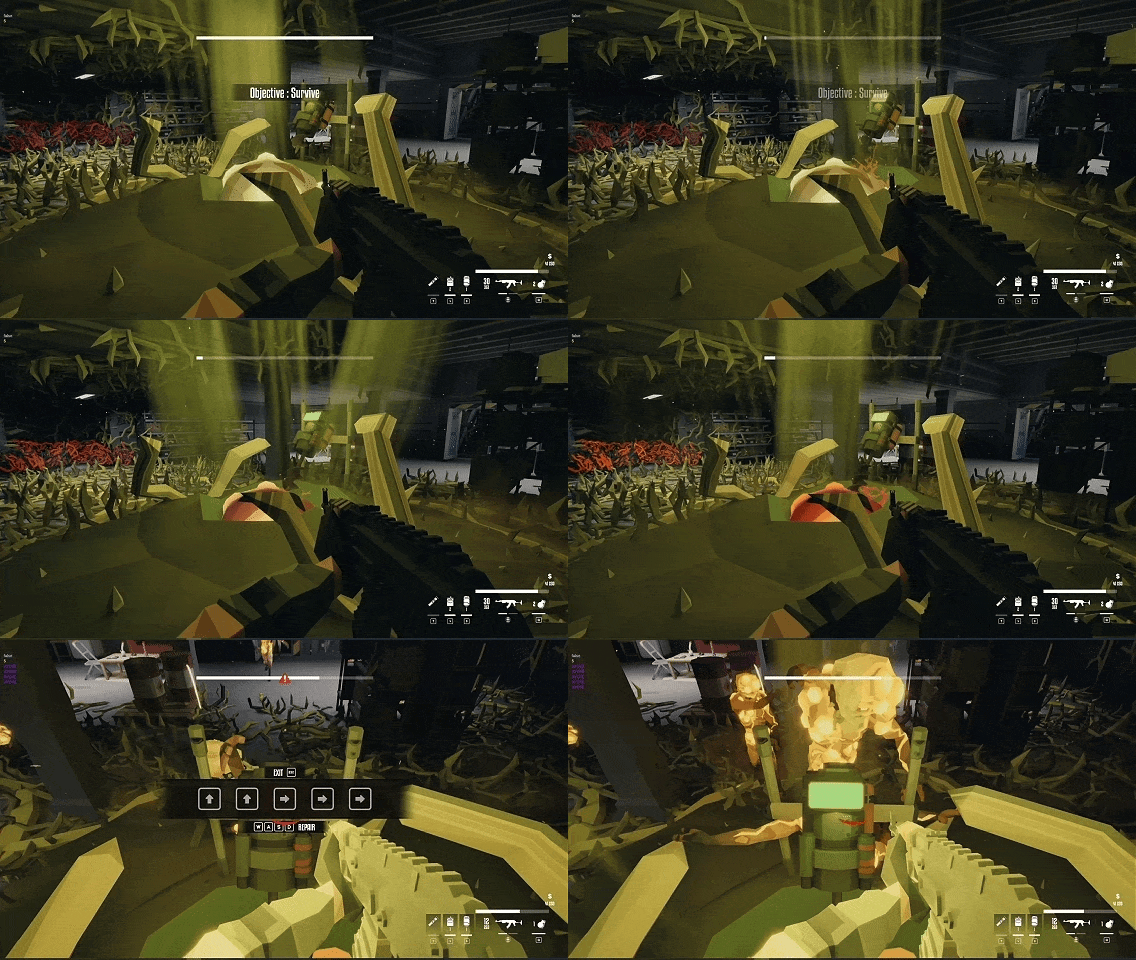
Each level (except the first) is divided into two distinct game modes : Hive Nests and Underground Nests.
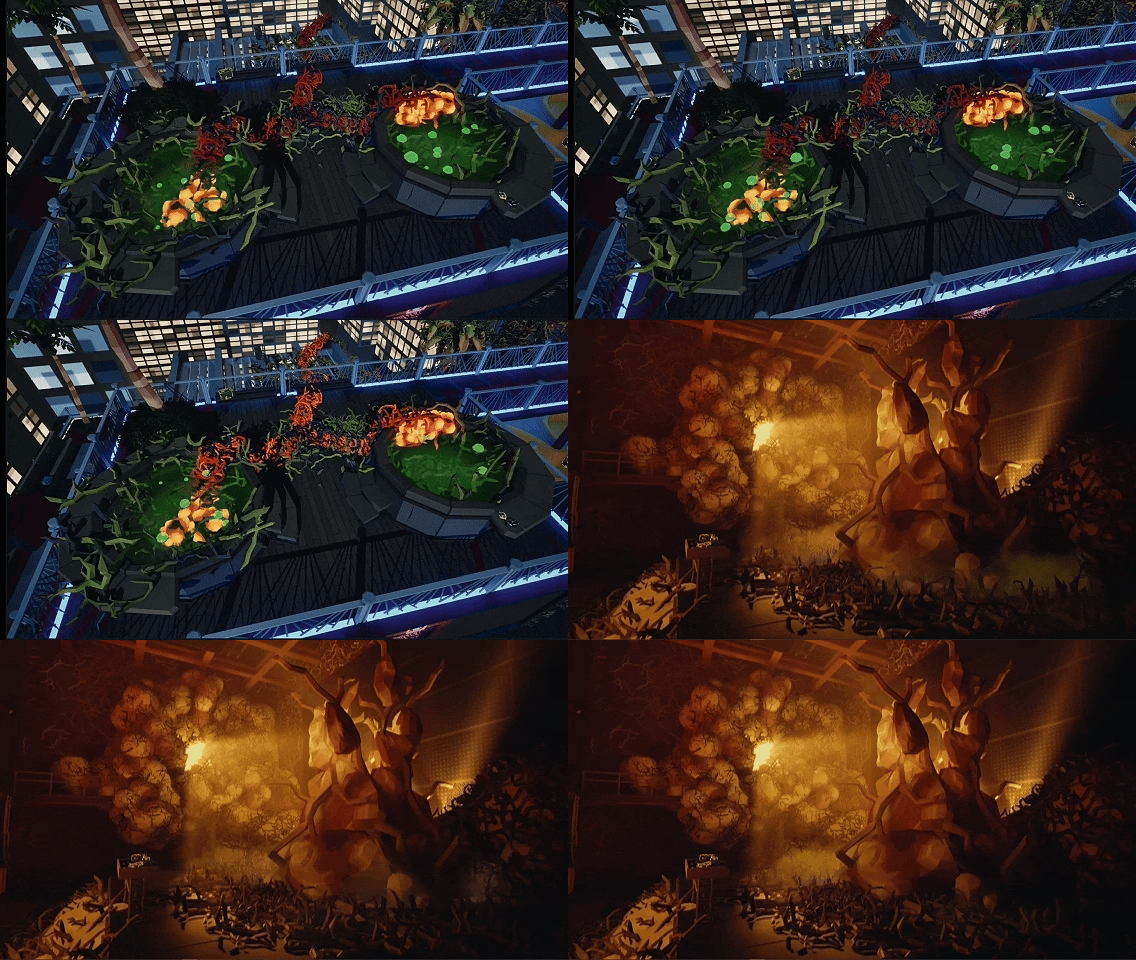
Hive Nests : Revolve around three extermination targets : Bulbs, Breeders, and the Hive Core. Groups of 3–4 Bulbs are connected to a Breeder by visible vines. Destroying all Bulbs exposes the Breeder, while the Hive Core must be destroyed using a delayed detonation bomb.
Underground Nests : Consist of three nests that can only be destroyed using a drill. The drill can break during use and must then be repaired through a short minigame.
Level Guidelines
Working as a team, we had to ensure consistency around our map design, pacing and intensity through all levels. To help us achieve it, we developed charts to establish a clear guideline, allowing us to anticipate the needs of each level.
Level Intensity Chart : Throughout the game, the difficulty follows a classic progression by introducing new mechanics and gradually increasing enemy variety and quantity. Each level follows a similar intensity curve to maintain consistent rhythm and pacing, while adapting to its unique themes and content to prevent repetition and keep the experience engaging.


Level Flowchart : Extermination contracts are divided into two distinct game modes : Drill and Hive Nest. Both types share the same overall level structure, which follows this simple flowchart and helps the team maintain consistent logic and similar concepts across all levels.
Top Down Designs

First Contract | Located in a family house, it introduces basic enemies.

Second Contract | Located at a rest stop, it's the first real contract and introduces two new enemies.

Fifth & Final Contract | Located in a nightclub, it blends all the mechanics & enemy types seen throughout the game.
First Contract | Located in a family house, it introduces basic enemies.
Unique Sequences

Harvester sequence inside the cornfield in the "MILK RUN" contract.

"Jugger Pest" mutant introduction in the "GIVE IT A REST" contract.

"Kamikaze" mutant introduction in "THE SLAMMER" contract.
Harvester sequence inside the cornfield in the "MILK RUN" contract.
Blockout Process
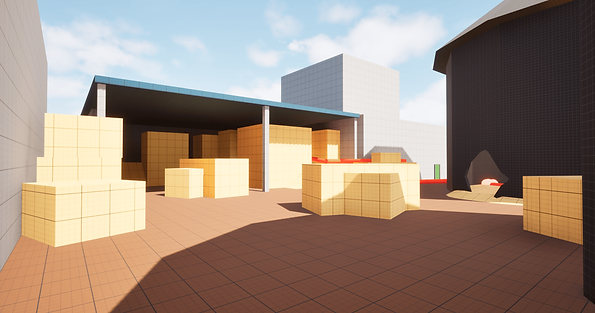
Since I had other tasks in the project, such as level art, VFX, and some Blueprints, I kept my level design as simple as possible, while still ensuring that it clearly expressed my design to the team. This method allowed us to quickly playtest levels and iterate the parts that needed change along with the evolution of the game designs.


Tutorial | Training Ground
The training ground is the player’s first introduction to the game, taking place in a semi-military training course inside an abandoned hangar. It's a mandatory, one-time level designed to teach the core mechanics before the player gains access to the main mission contracts.

Layout & Mechanic Introduction
The tutorial gradually introduces the game’s core mechanics and combat interactions :
-
Shooting | Basic weapon handling and target practice.
-
Grenade | Introduces area damage through groups of targets.
-
Crouch | Teaches the player to move through low obstacles.
-
Flashlight | Introduces the flashlight for darker areas.
-
Kick | Teaches the melee kick through a dedicated target.
-
Cigarette | Introduces it as the basic healing item of the game.
-
Beer | Introduces the item providing temporary invulnerability.
-
Special Bullets | Introduces incendiary ammunition.
-
Objective Simulation | Introduces a simulated version of the "Hive Nests" game mode.
Guiding The Player
The tutorial is made to quickly introduces core mechanics through believable cues : yellow arrows highlight interactables, door lights and buzzers signal progression, while UI prompts introduce new controls. I also wrote and recorded the background voice-over to guide the player throughout the course.
Arena Game Mode
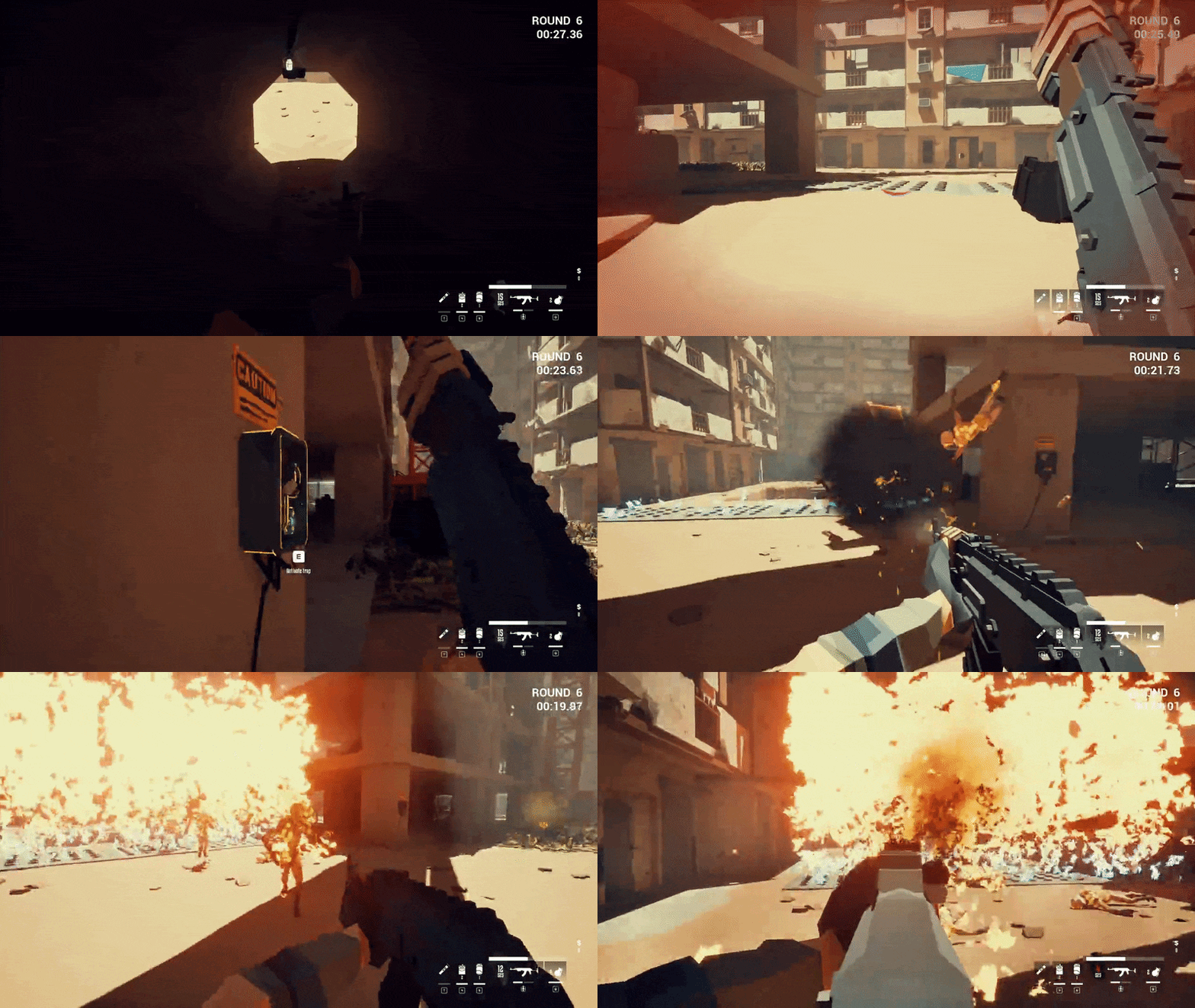
Upon completion of all contracts, a new game mode becomes available. ”Pit Fighting” is a nearly infinite round-based mode in which the player face up multiple waves of enemies in a restrained environment. I was tasked to make one of the two arena maps.
Design Challenges
The challenge was to create a compact environment that promotes strong combat flow while keeping the player engaged across multiple rounds. My two main design goals were to encourage constant movement and ensure that camping spots were difficult to hold for extended periods.


Layout & Navigation
Immersed in a construction theme, the arena features multiple interconnected paths that offers verticality, confined spaces, chokepoints and environment interactions to keep the player engaged around each corner of the map.
Combat Design
Two flame traps reward players with opportunities to eliminate multiple enemies quickly. One trap is placed at the tunnel exit, naturally creating a chokepoint that encourages players to take risks navigating the confined tunnel space in exchange for high-value multi-kill opportunities.
Additionally, to prevent the high-ground building from becoming an overly defensive position, I placed an enemy spawn point on an inaccessible third floor, to balance these strong vantage points and maintain pressure.
Level Design Techniques

Leading line
Micro landmark
Light and color
Light & Color
In some levels, the players would sometimes lose track of their surroundings. I used lighting and color to ensure contrast and create micro landmarks in the environnement to help guide the player along the golden path.
Leading Line
I used them across the environment to subtly guide along the intended paths. In the “Hive Nest” game mode, they also serve as a core navigation mechanic, helping players identify objective locations without explicitly revealing the path, encouraging curiosity and exploration.

Leading lines

Attractive opening
Light
Leading line
Attractive Opening
I used them across the environments to subtly guide along the intended paths. In the “Hive Nest” game mode, they also serve as a core navigation mechanic, helping players identify objective locations without explicitly revealing the path, encouraging curiosity and exploration.
Affordance Denial
To preserve pacing and avoid dead ends, certain areas were visually made less attractive by limiting lighting, using muted colors, and concealing access with foliage, barricades or barriers, discouraging players from perceiving them as viable paths.

Affordance denial
Attractive openings
Light

Light
Landmark
Landmark
Multiple landmarks were implemented to support player orientation and spatial awareness, helping reduce unnecessary backtracking and improving navigation flow. I especially used micro landmarks in "Hive Nest" levels, which are more open and promote back and forth traversal to find and destroy the objectives.
Tech Game & Level Design
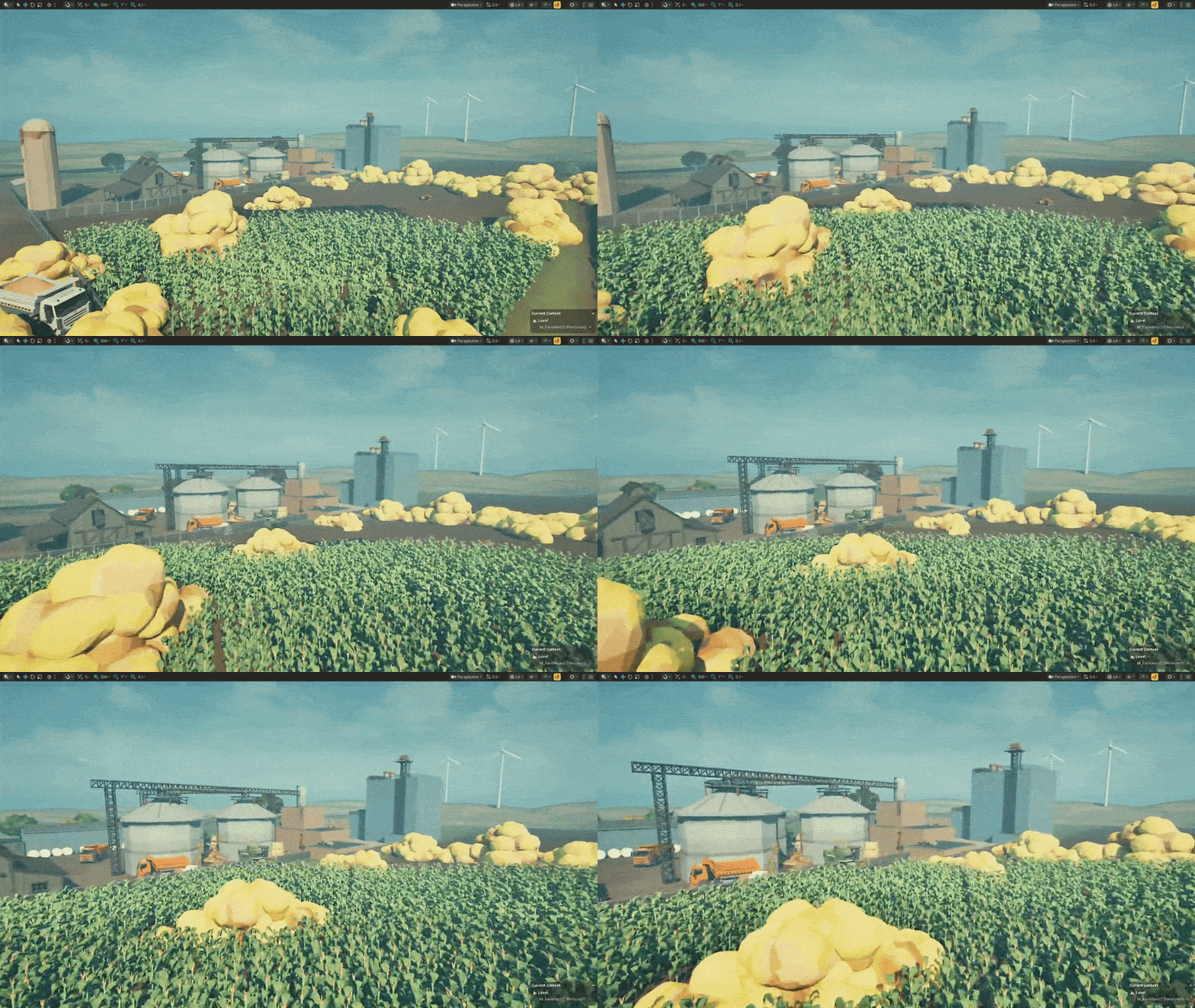
Managing Foliage & LODs
I worked on the technical implementation of levels to make sure they remained both performant and visually pleasing. I optimized foliage by configuring LODs to maintain visual quality while reducing performance costs at longer distances.

NavMesh Areas
I implemented NavMesh areas to ensure AI navigation was restricted to spaces that were physically accessible to the player making sure to avoid unnecessary navigation in unreachable areas, helping maintain functionnal AI behavior and performance efficiency.
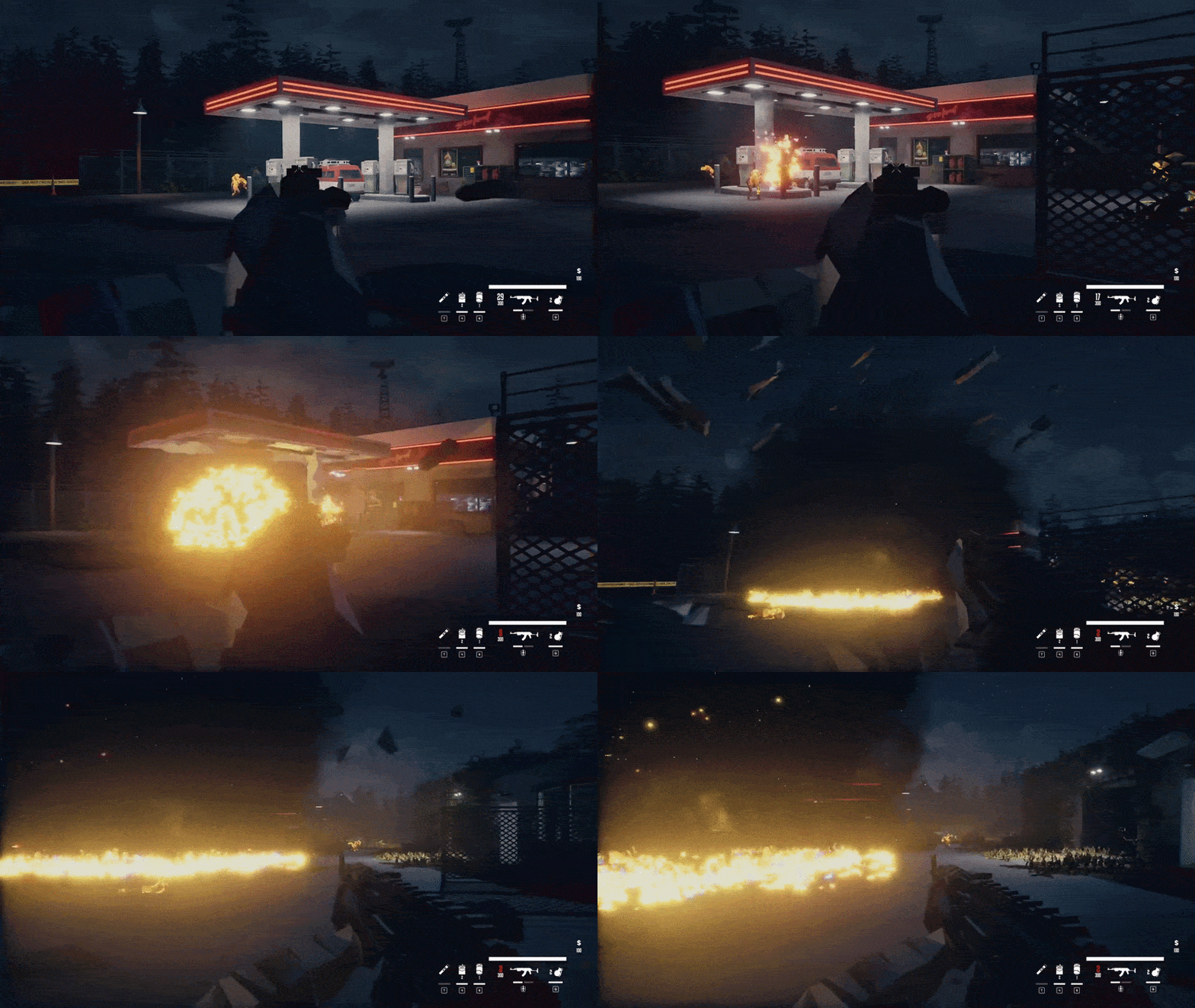
Collision Optimization
I created optimized collision for meshes that balance simplicity with gameplay credibility. For example, I manually designed collision for railings to allow projectiles to pass through while preserving believable physical interaction. These adjustments help diminish frustrating collision encounters without creating unnecessary collision complexity.

AI Spawning & Blueprints
I implemented AI spawn logic and trigger systems to control when enemies should appear, making sure encounters occur at the right moments while preventing unnecessary AI from being active all over the level. I also developed Blueprint-based interactive elements to make levels feel more alive and fun to navigate.
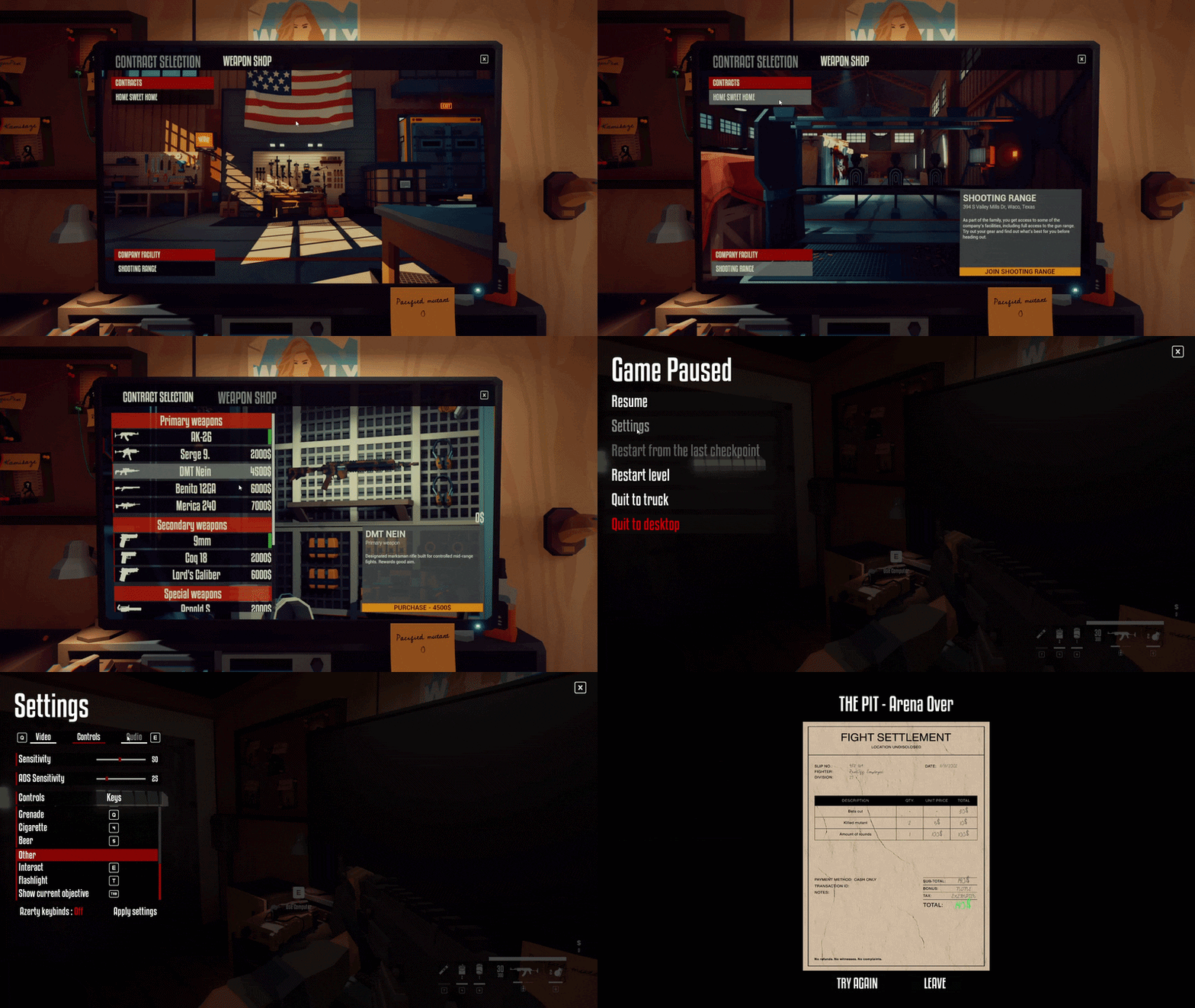
UI Design & Implementation
I designed and implemented most of the game UI systems using Blueprint scripting in Unreal Engine, including the Shop UI, Contract Selection UI, Pause Menu, Settings UI, Keybinds Mapping System, and End Mission UI. I prioritized a simpler and easily navigable design, allowing players to quickly understand and use the different menus.
Closing Thoughts
Pest'Off is the largest project that I have worked on to this date, and as my first game released on Steam, it holds a special place for me. The development process was a valuable learning experience, teaching me both the strengths and challenges of teamwork, including how to manage collaboration and resolve conflicts effectively.
Creating Pest'Off taught me the importance of maintaining clear and consistent documentation throughout production. It helps to keep the team aligned on shared goals, ensures a clear vision of the project, and reduces time lost when implementing changes. During the project, my role as a Level Designer also expanded into Visual Scripting, VFX and Level Art, allowing me to contribute across multiple areas to support the proper development of the game.
From a Level Design perspective, the project required adapting levels to more limited movement mechanics, as the player cannot mantle or jump. This constraint encouraged more intentional spatial design and readability. I also further developed my approach to combat spaces, as most levels feature one or more dedicated combat encounters or arena setups.
Steam Page
