PUFFED & DANGEROUS
Action-Adventure, Isometric | Game Jam
Introduction
Puffed & Dangerous is an isometric action-adventure game where you play as a pufferfish fighting to escape a sushi restaurant aquarium. Fight your way through fish enemies, explore and discover valuables across each level, solve puzzles and defeat the boss fish.
Project Details
- 4 weeks development, 2025
- Unreal Engine 5
- EJVM Spring Game Jam
- Game Jam Theme : Charge
- Team of 5 people
- Level Design
- Level Art
- Puzzle Design

My Goals
-
Design the second level of the game, that takes place in a village on rocky/mountain environment.
-
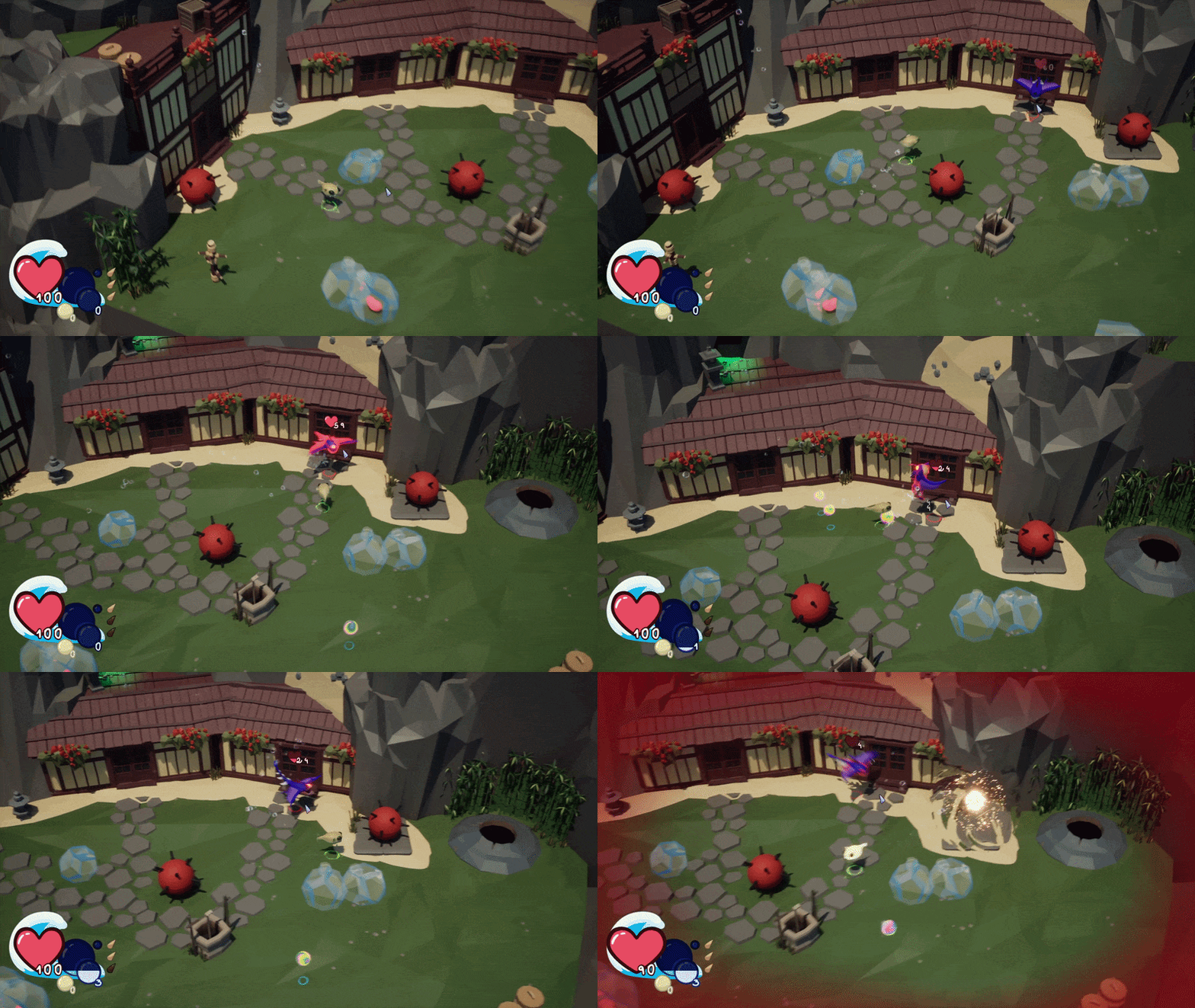
Introduce a new enemy through the gameplay : the Sting Ray.
-
Introduce a new environmental mechanic : the sea mine.
-
Design the temple puzzle.
-
Design combat arenas for wave-based & boss fights.
-
Design and implement optional side caves for rewards.
-
Implement dynamic camera behaviours(zoom & rotation) to improve the flow of the level and add a wow effect to reveals.
-
Scatter & hide collectibles(clam pearls) along the main path, rewarding the player curiosity & awareness.
Team Goals
-
Incorporate the Game Jam theme charge, in the player mechanics.
-
Fully playable 30–40 minute experience featuring engaging level design, puzzles, enemy encounters and a final boss.
-
Clear and readable level design with a smooth difficulty curve that gradually introduces new mechanics and new enemies.
-
Dynamic and easy-to-learn combat.

Level Walkthrough
Open the Village Gate
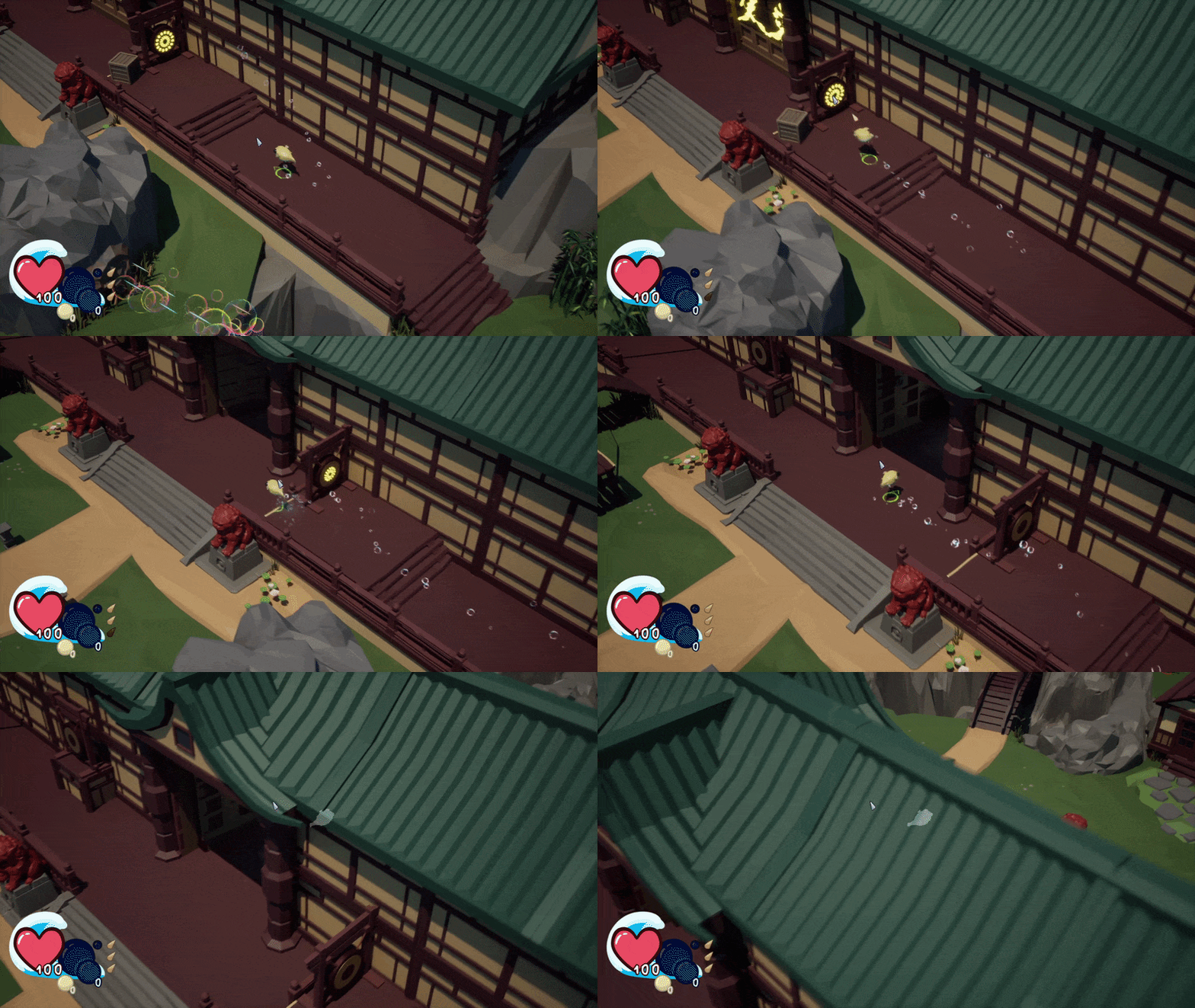
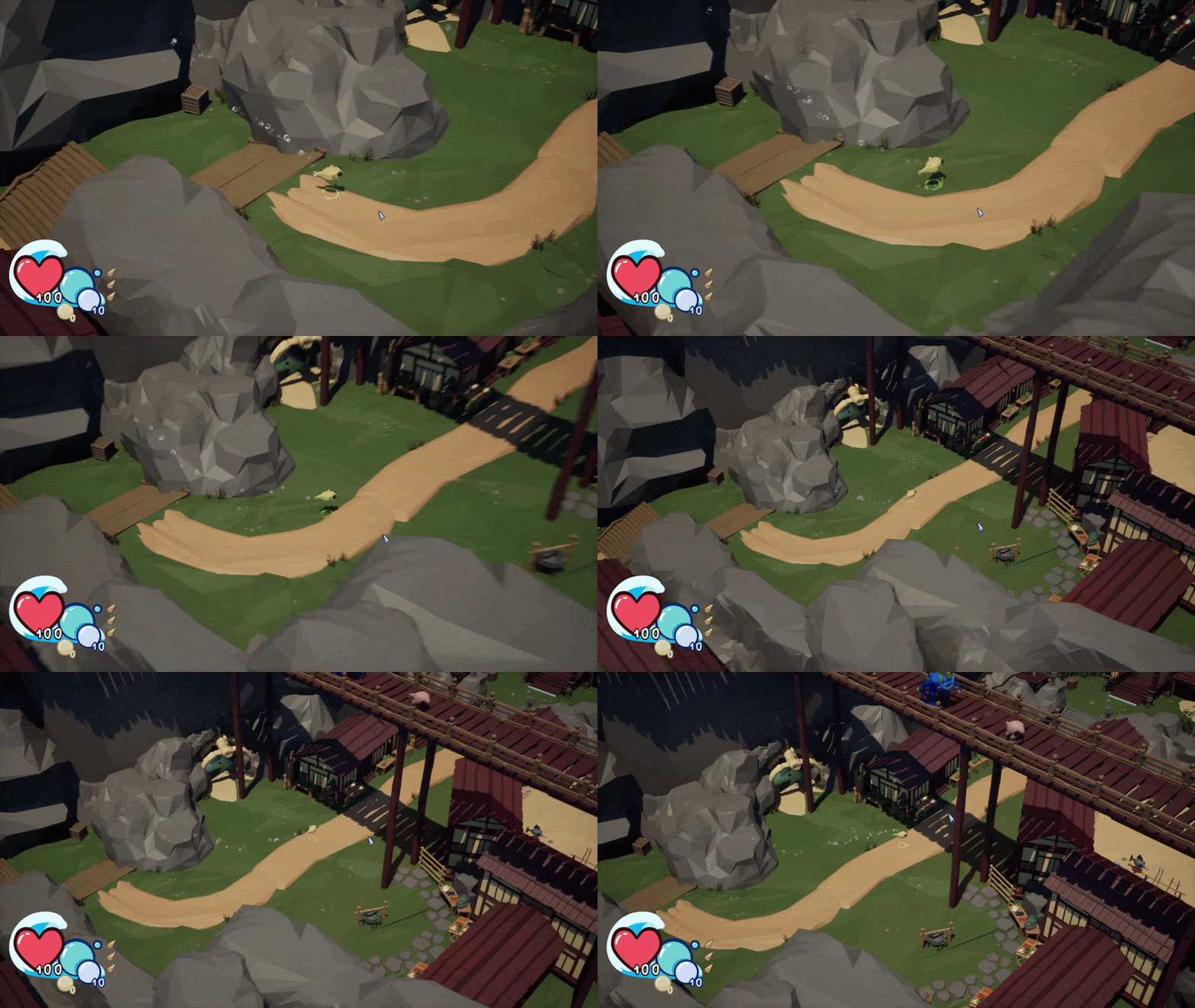
Bridge Reveal
Wave Fight & Sting Ray Introduction
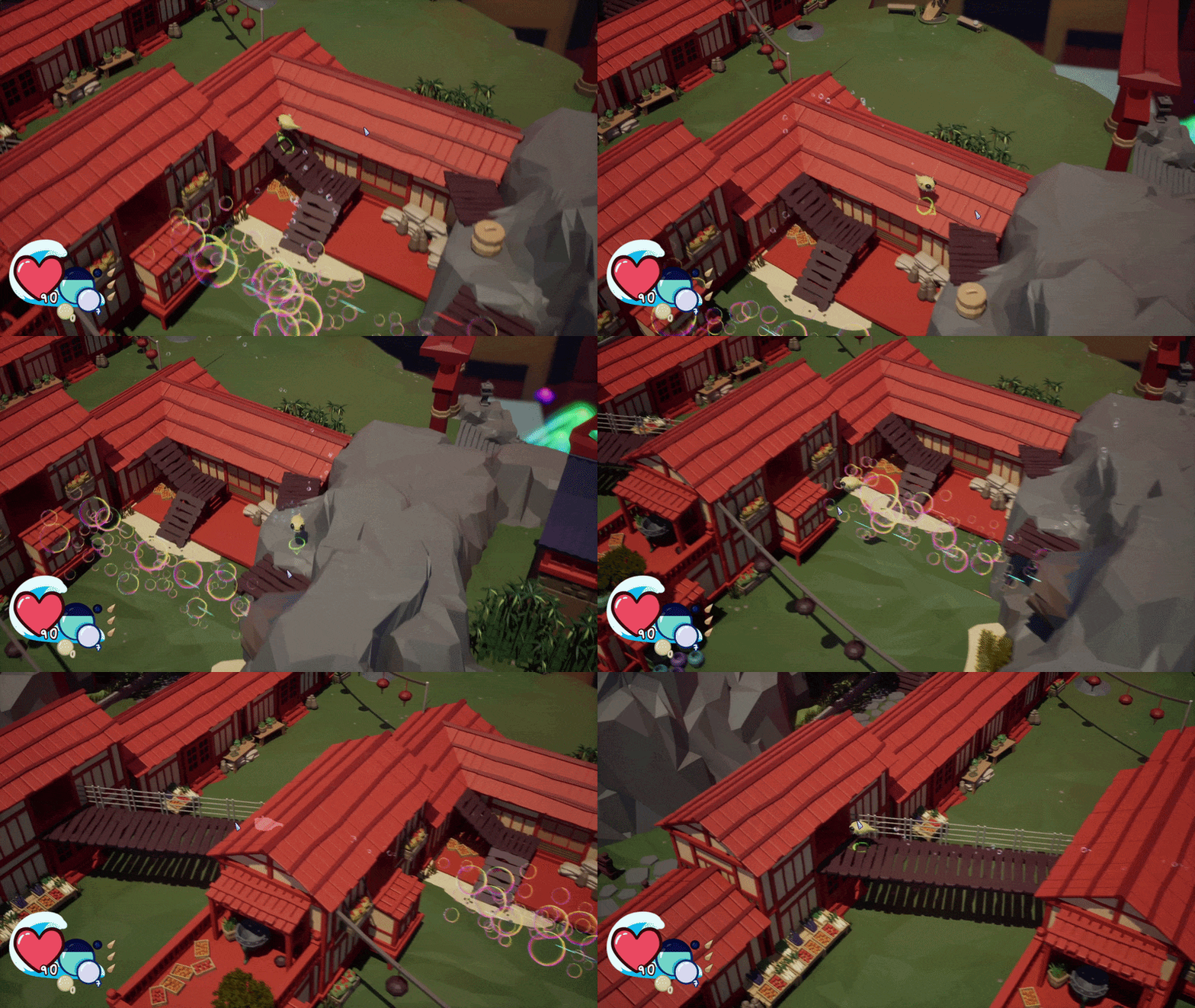
Progress Into the Upper Village
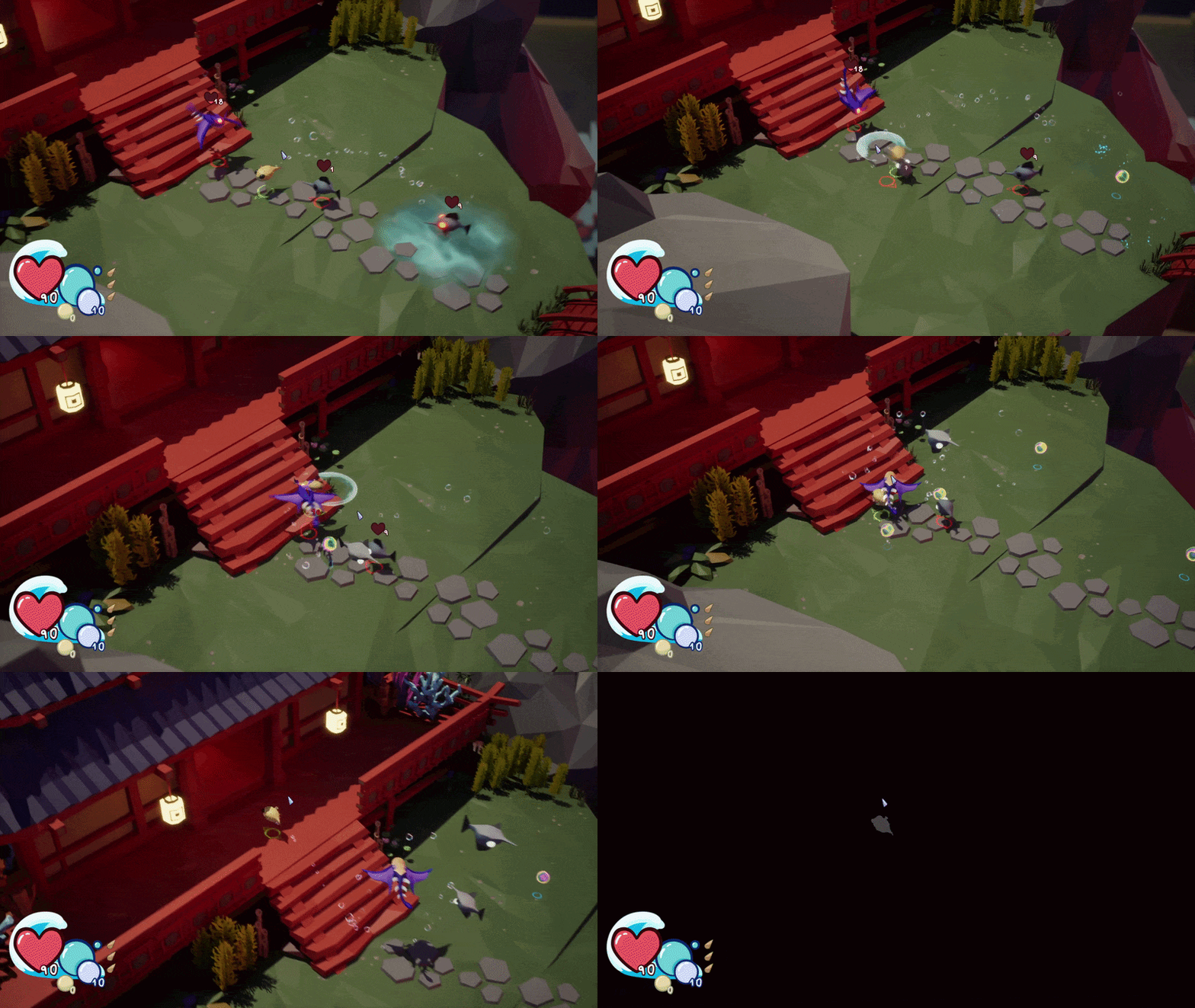
Make Way to the Temple
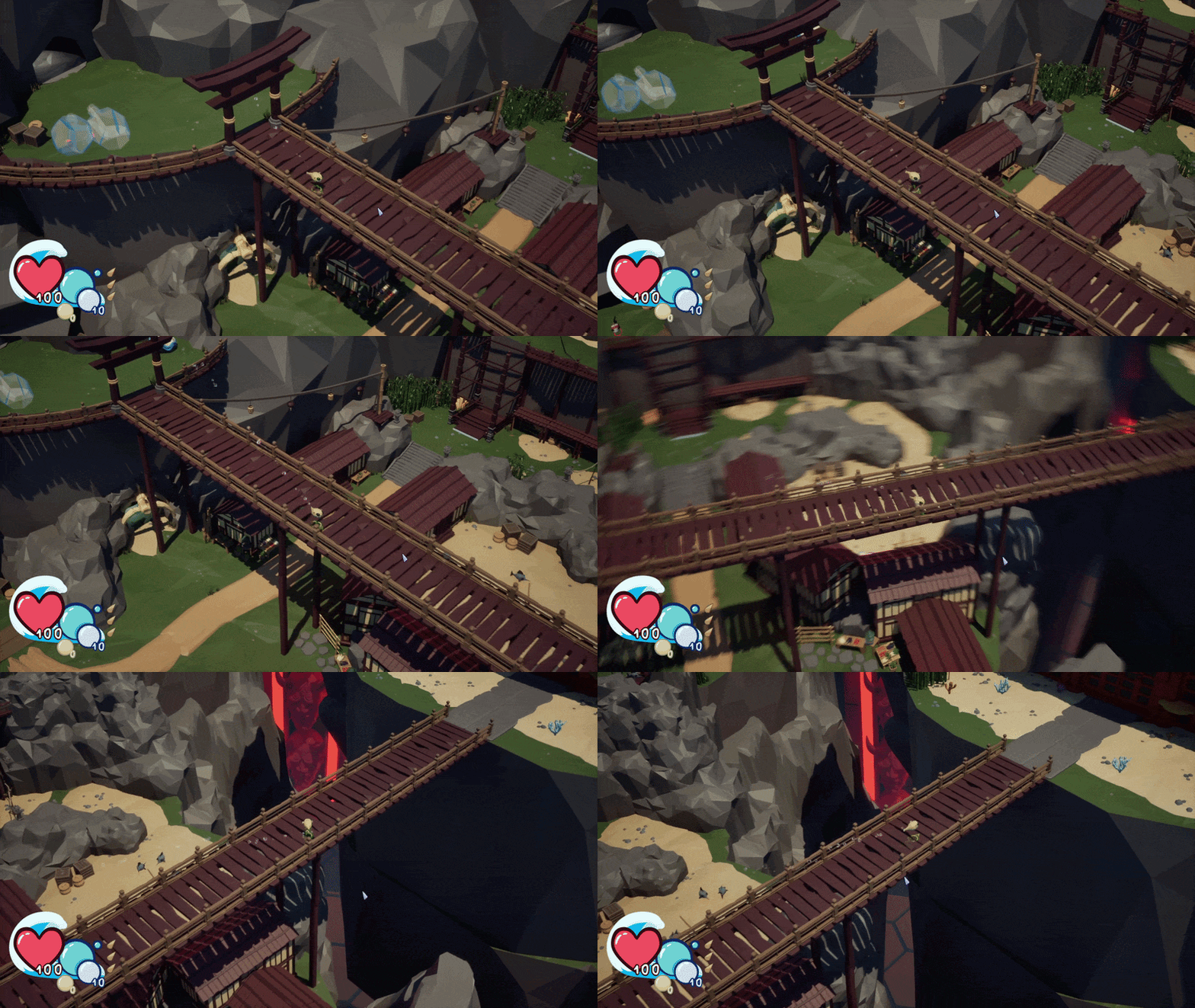
Pass Onto the Bridge
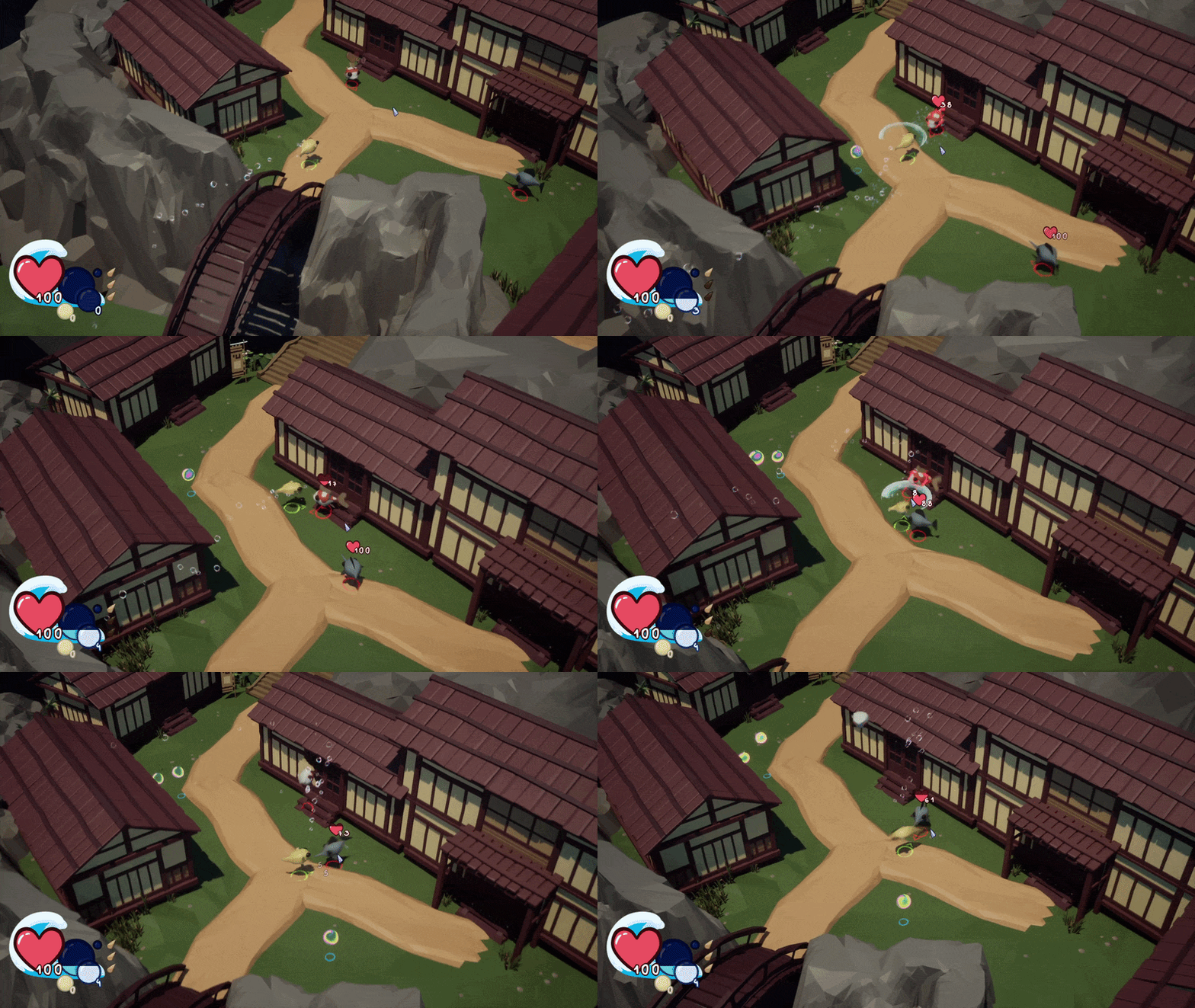
Progress Into the Lower Village
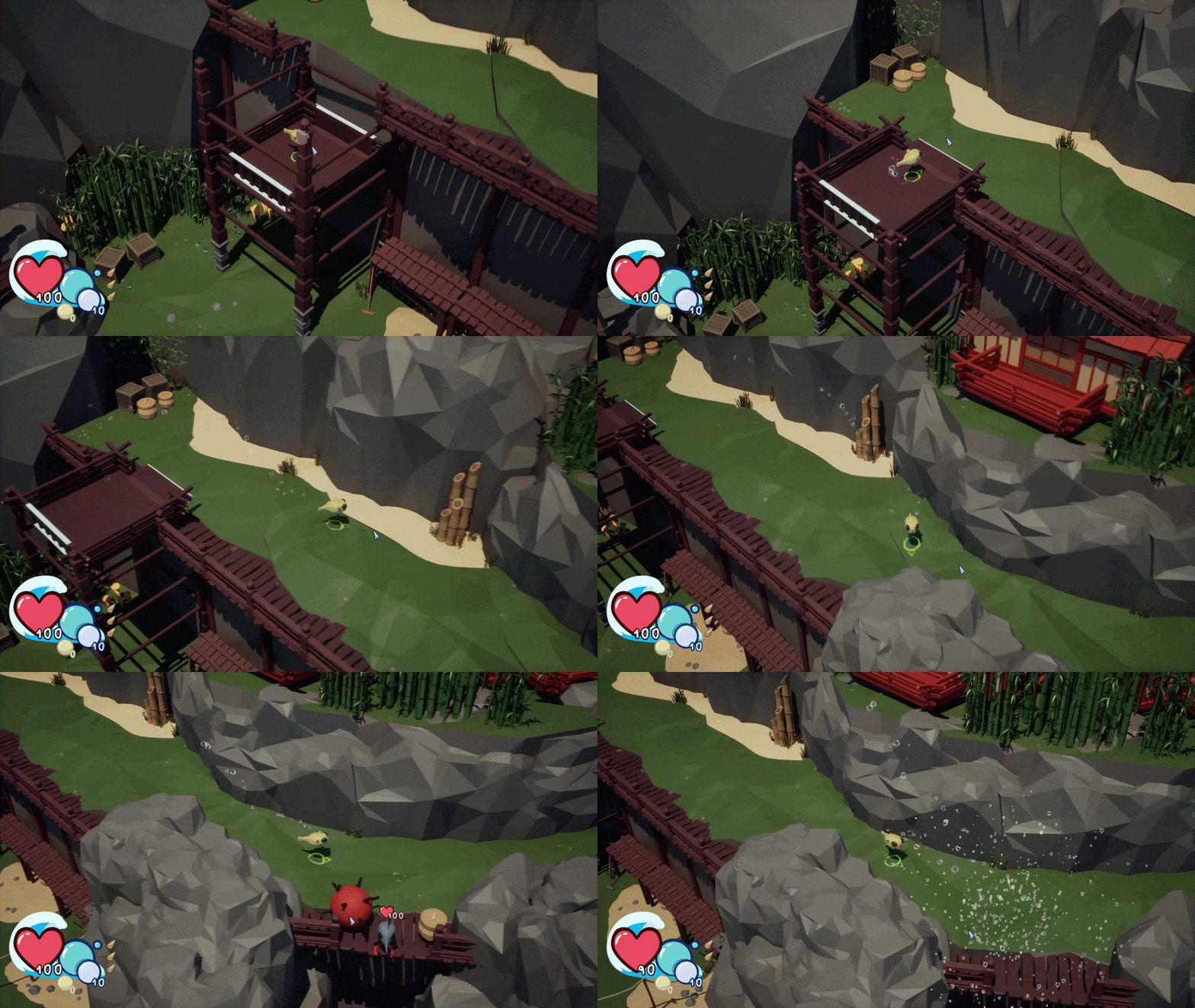
Elevator & Sea Mine Introduction
Enter the Upper Village
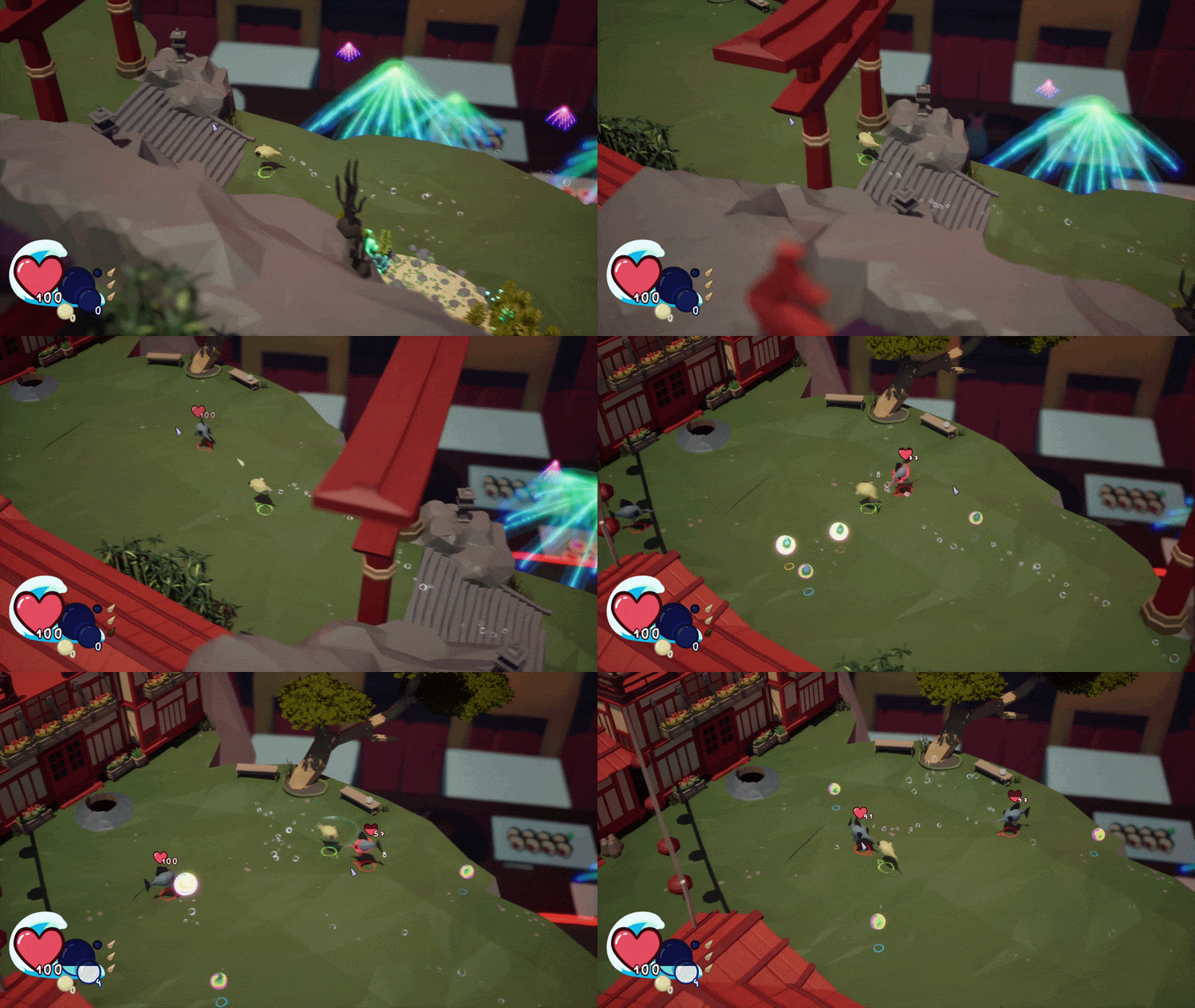
Courtyard Wave Fight
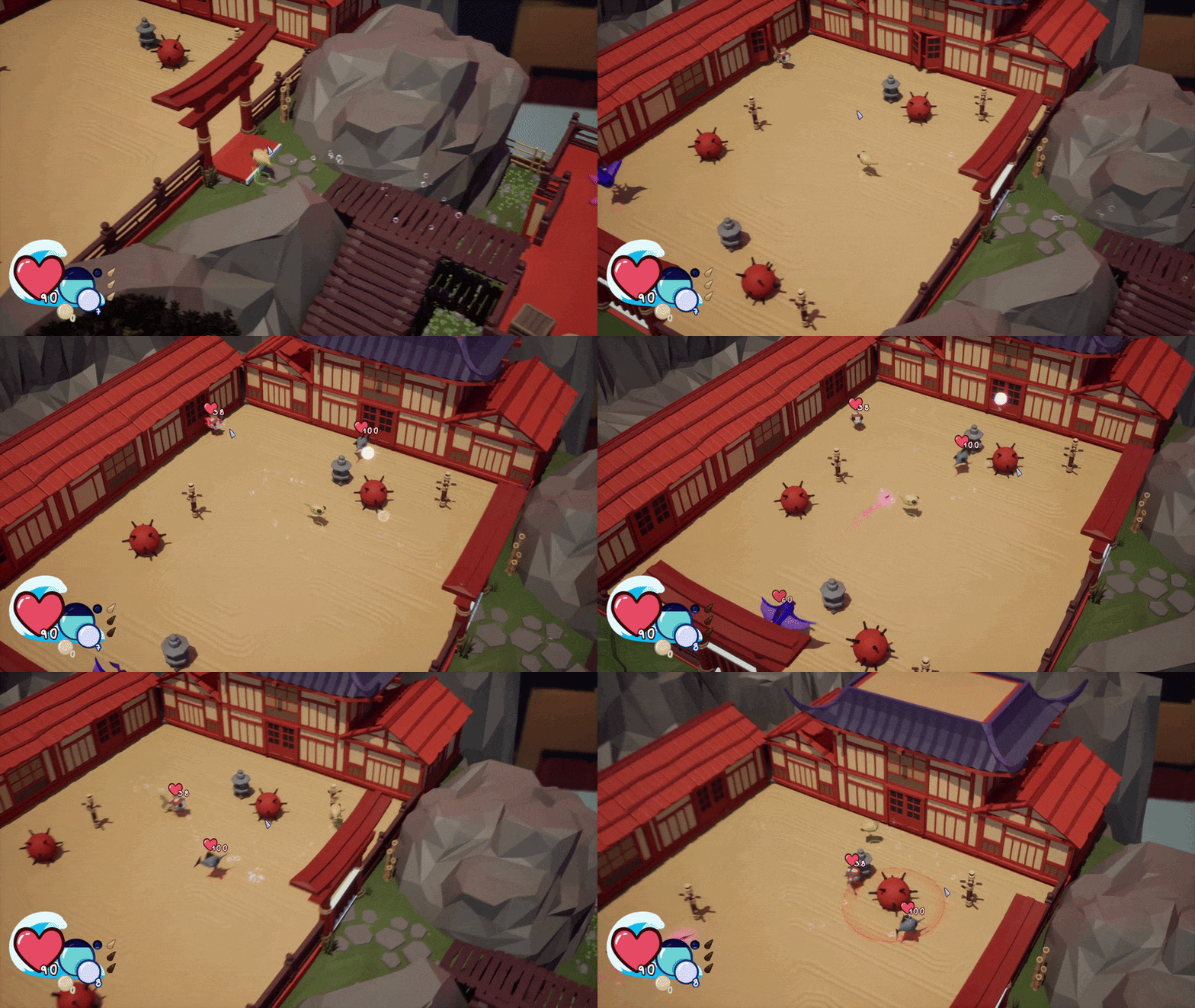
Solve the Temple Puzzle
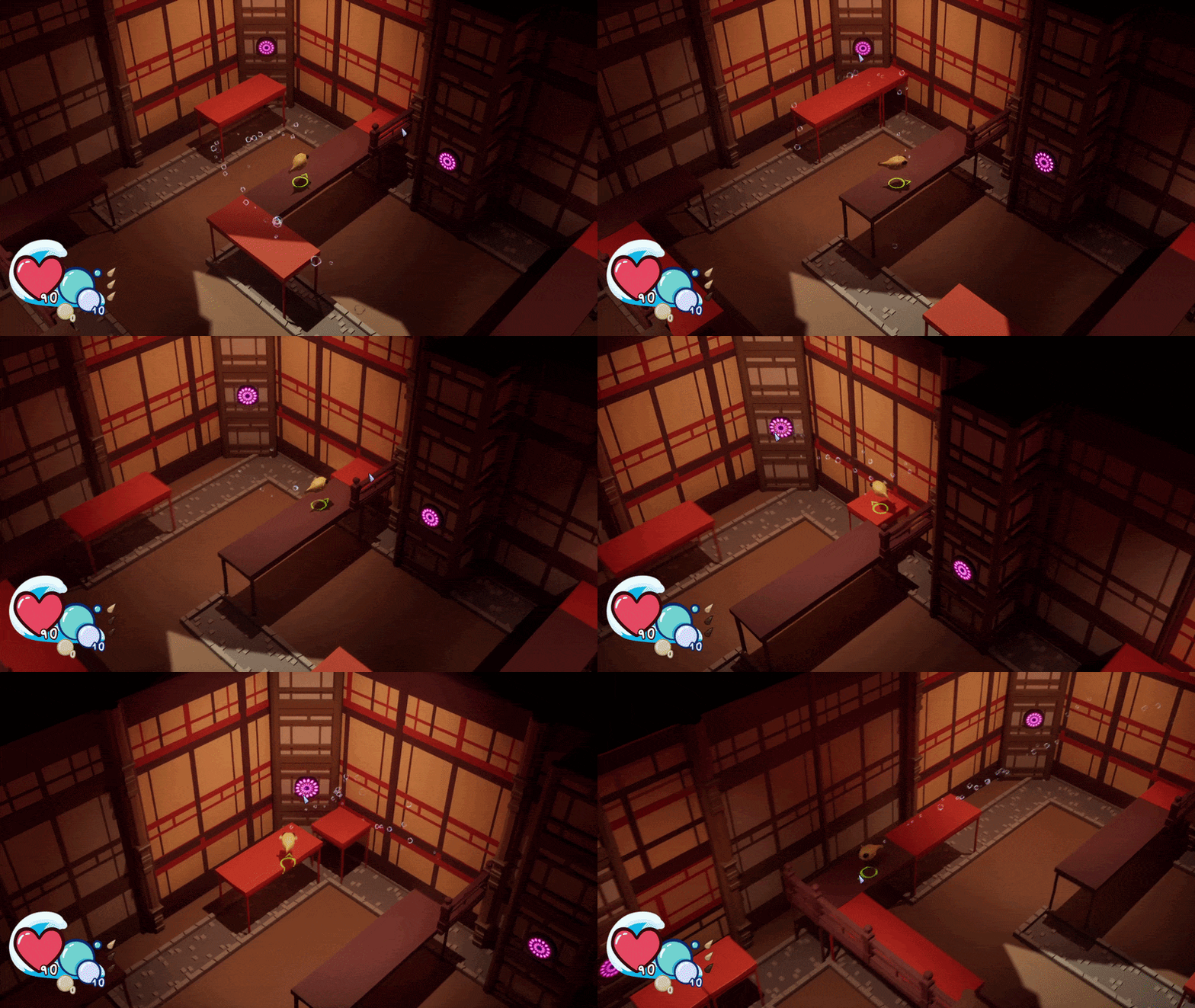
Fight Boris The Impaler (Boss)
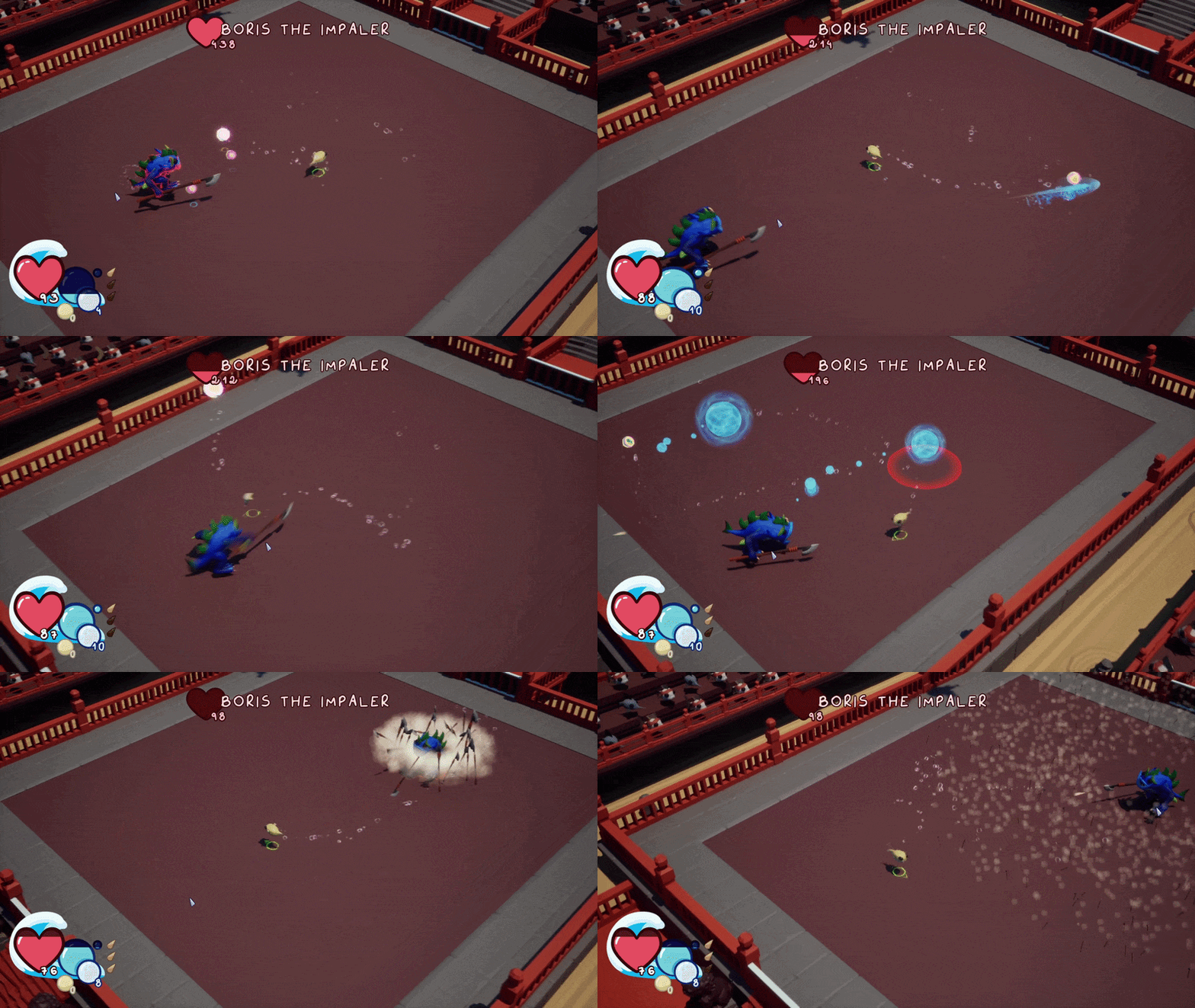
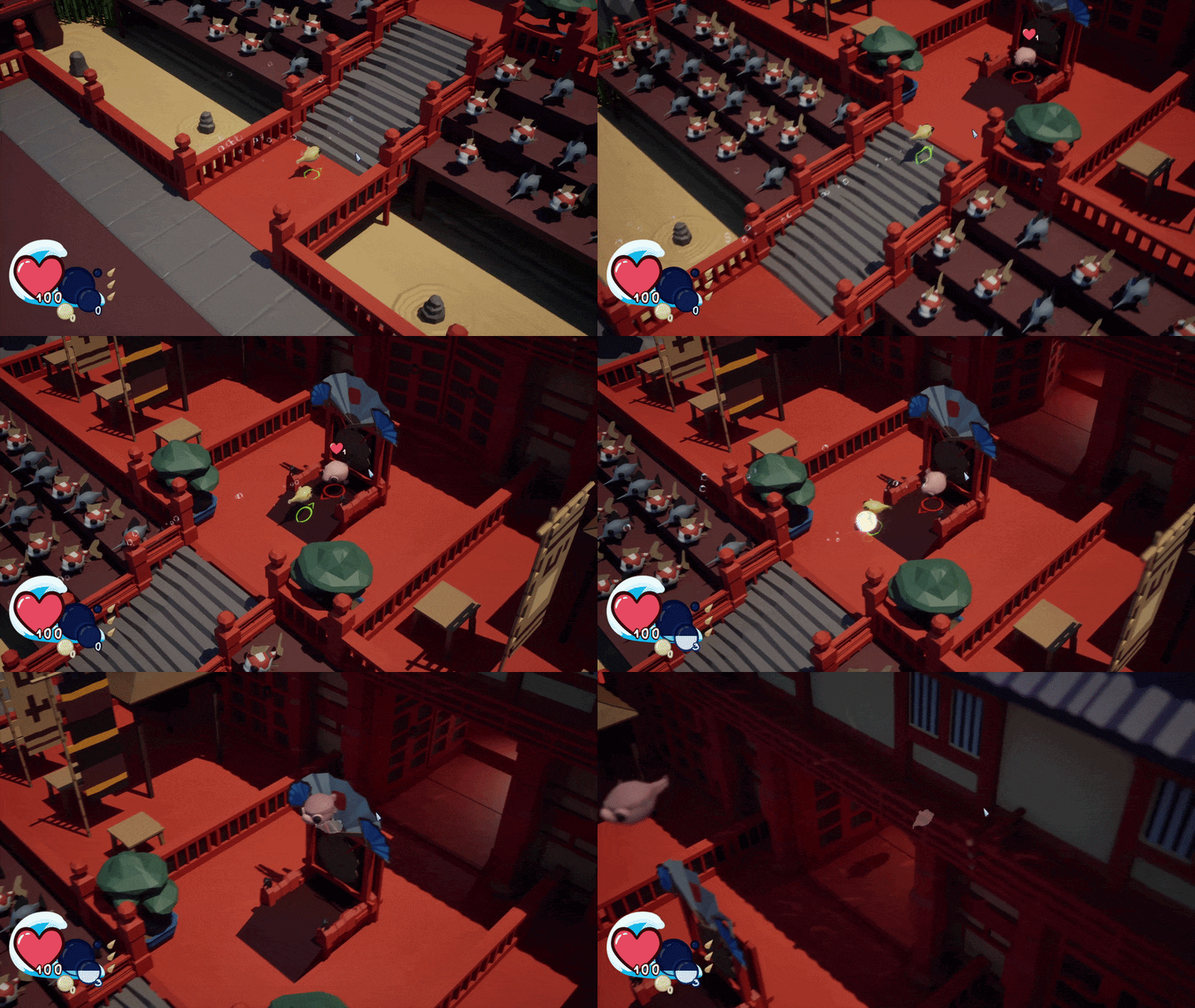
Kill Ralph & Game Ending
Level Breakdown

References
During pre-production, I gathered and organized visual concepts and references to establish a clear art and design direction. Drawing inspiration from games such as Death's Door, TUNIC, and the The Legend of Zelda series, I used tools like PureRef to align ideas early on, ensure visual and gameplay consistency, and provide a strong creative foundation for the rest of the production.
Paper Design

Final Design

Collectibles / Clam Pearls
Clam Pearls serve as the game's collectible and can be used to upgrade player stats such as health and damage. To encourage exploration and reward curiosity, they are intentionally placed off the critical path throughout each level.
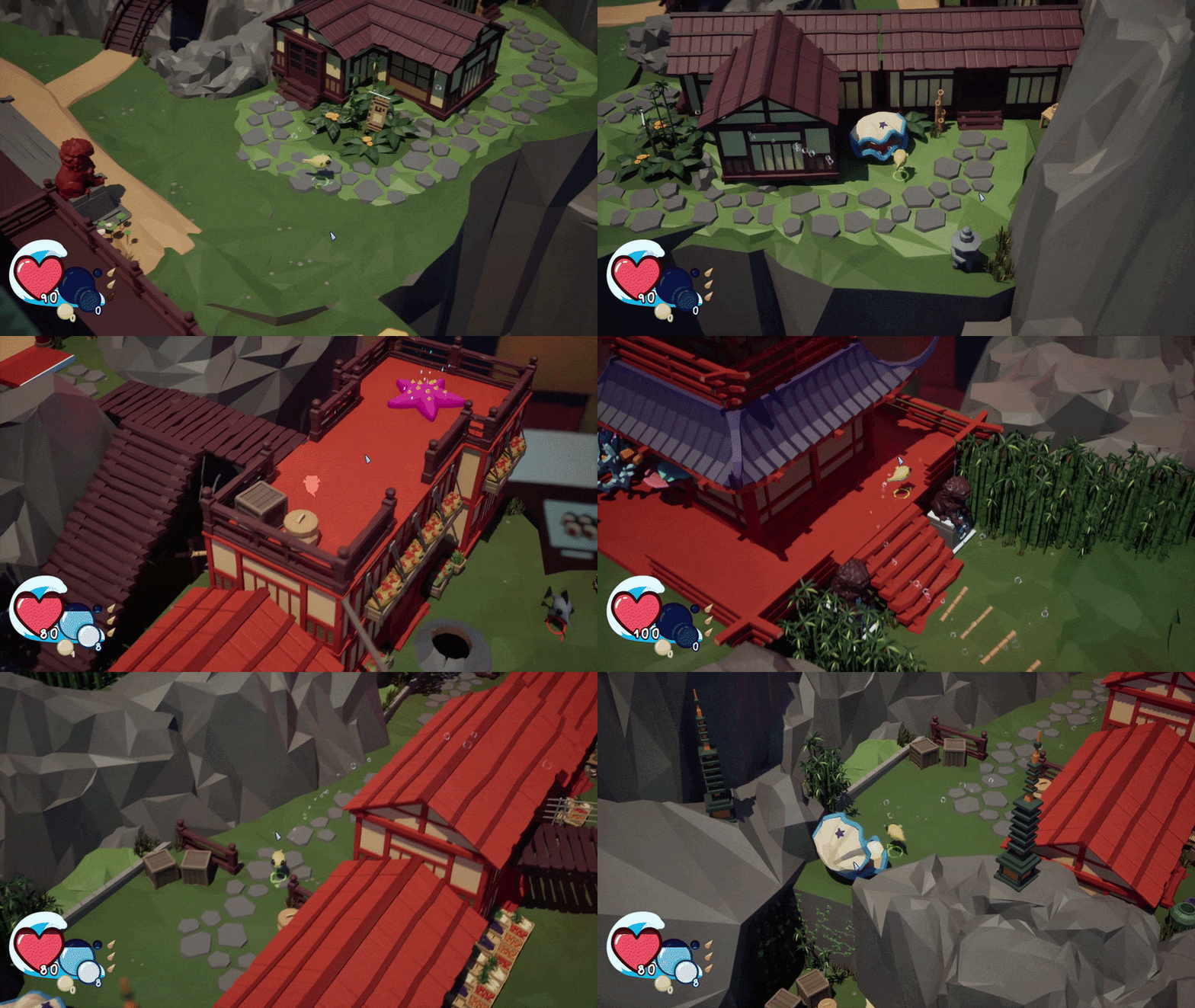
Cave System
The cave system enhances the exploration experience. They were made to be optional self-contained areas scattered off the critical path rewarding player's curiosity, environmental awareness, and skills. Each cave offers unique small challenges involving aim precision, interaction, navigation or combat in exchange for rewards.
Temple Puzzle
Design Challenges
Unlike the other puzzles, particularly the cave challenges which focus on simple and quickly executable mechanics, this puzzle was designed to provide a longer and more complex experience requiring both observation and reasoning. The goal was to introduce a more engaging navigational challenge while maintaining a difficulty level that remained consistent with the overall pacing and accessibility of the game.

Layout & Navigation
The puzzle is build around remotely activated platforms controlled by gongs(switch). A single gong can move multiple platforms at the same time but one platform can also be moved by multiple gongs. In addition of their red colors, there are visible rails beneath each platform clearly indicating the direction of each platform. A mid-puzzle checkpoint helps maintain pacing and reduce frustration if the player falls.
Level Design Techniques
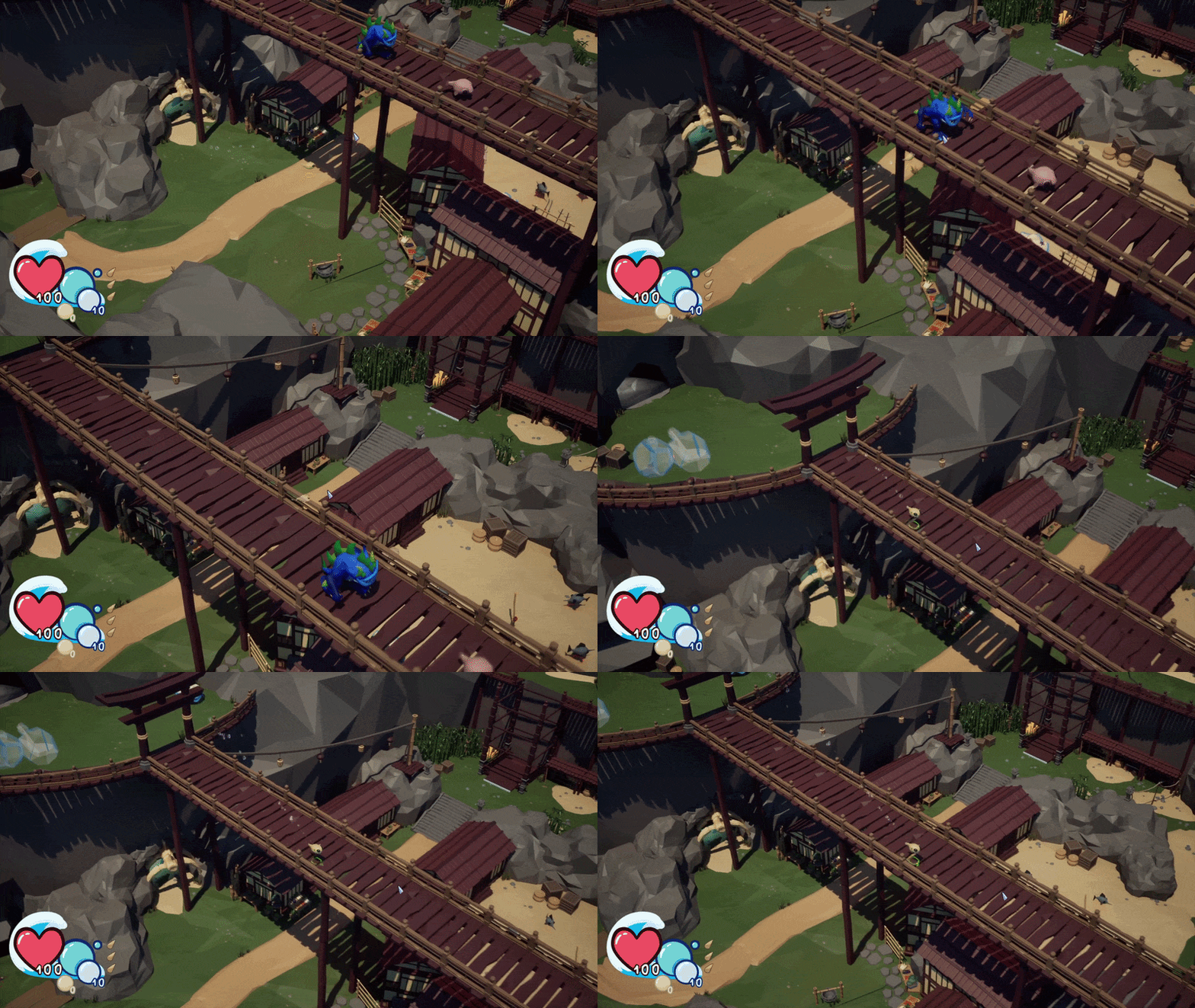
Landmark
In this level second level, the bridge acts as the main landmark. It allows the player to mentally map the environment and creates impactful navigation moments as players transition from beneath the structure to crossing above it.
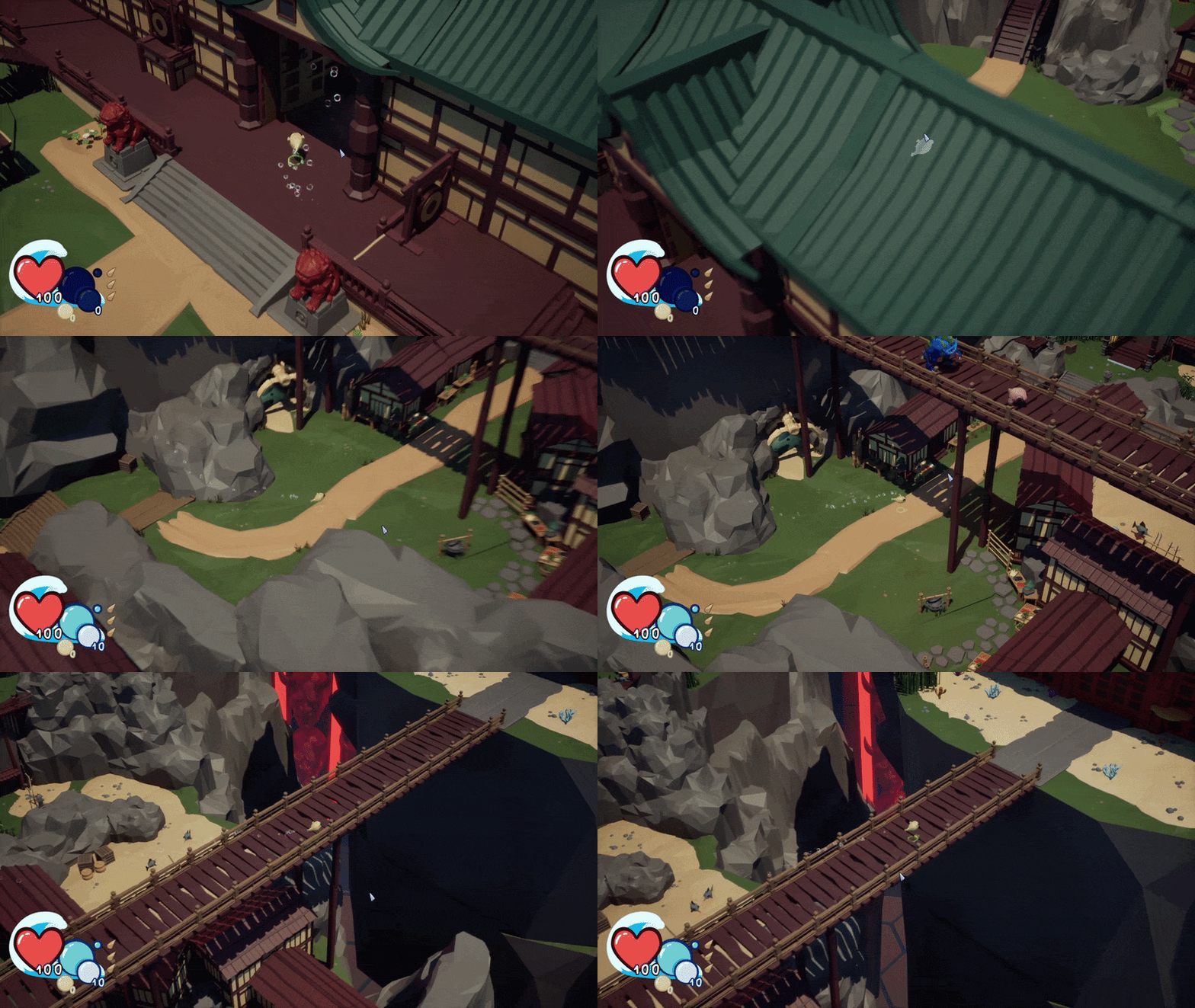
Reveals
Upon the first encounter of the bridge, I used a trigger to zoom out the player camera allowing them to clearly see the upcoming area while emphasing on the bridge as a key landmark hint by the upcoming final boss walking across it.
Back Gates
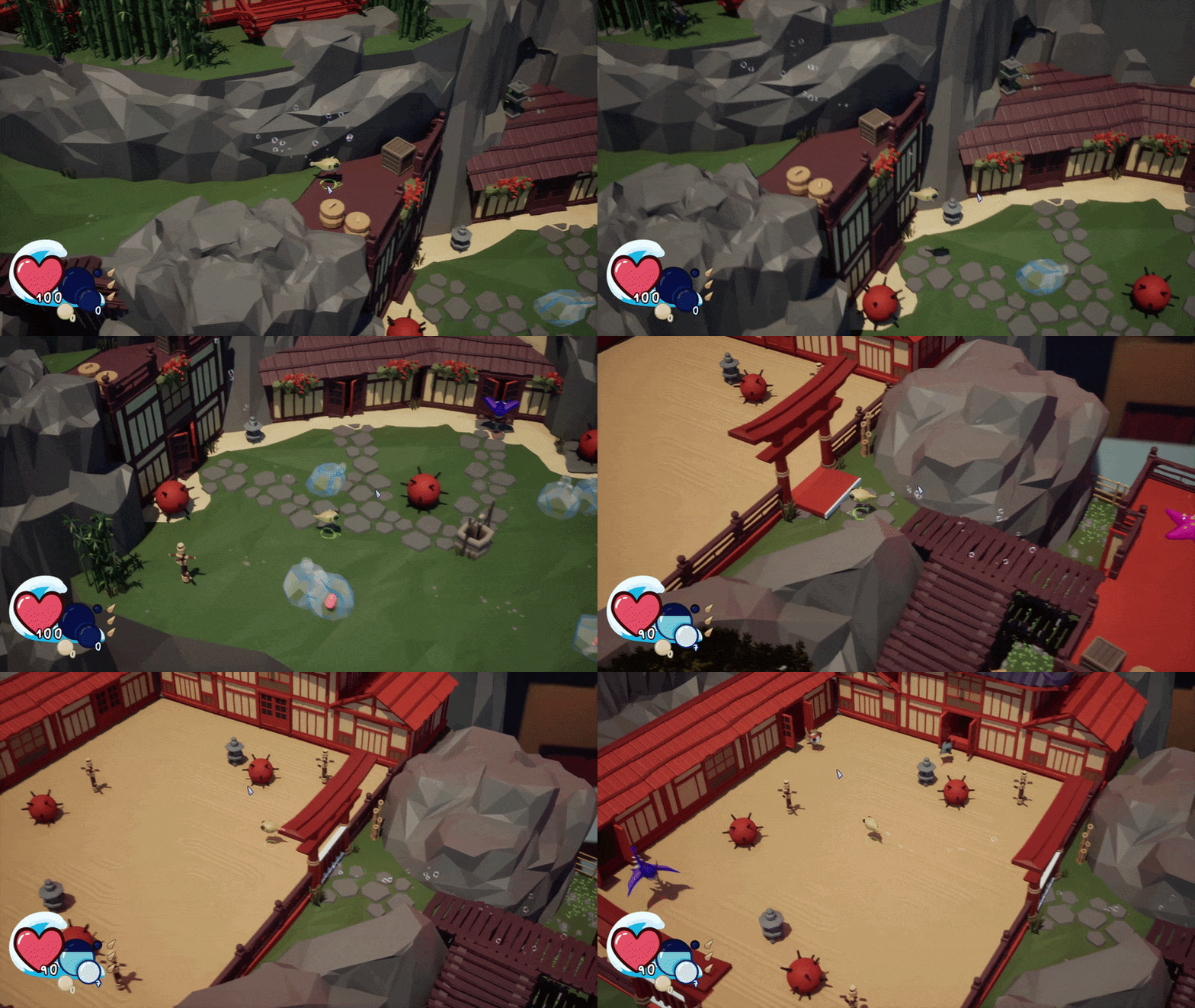
I primarily used back gates before wave-based combat arenas to isolate each encounter and prevent players from backtracking after completion. Mainly helping me maintain the level pacing and flow throughout the experience.
Verticality
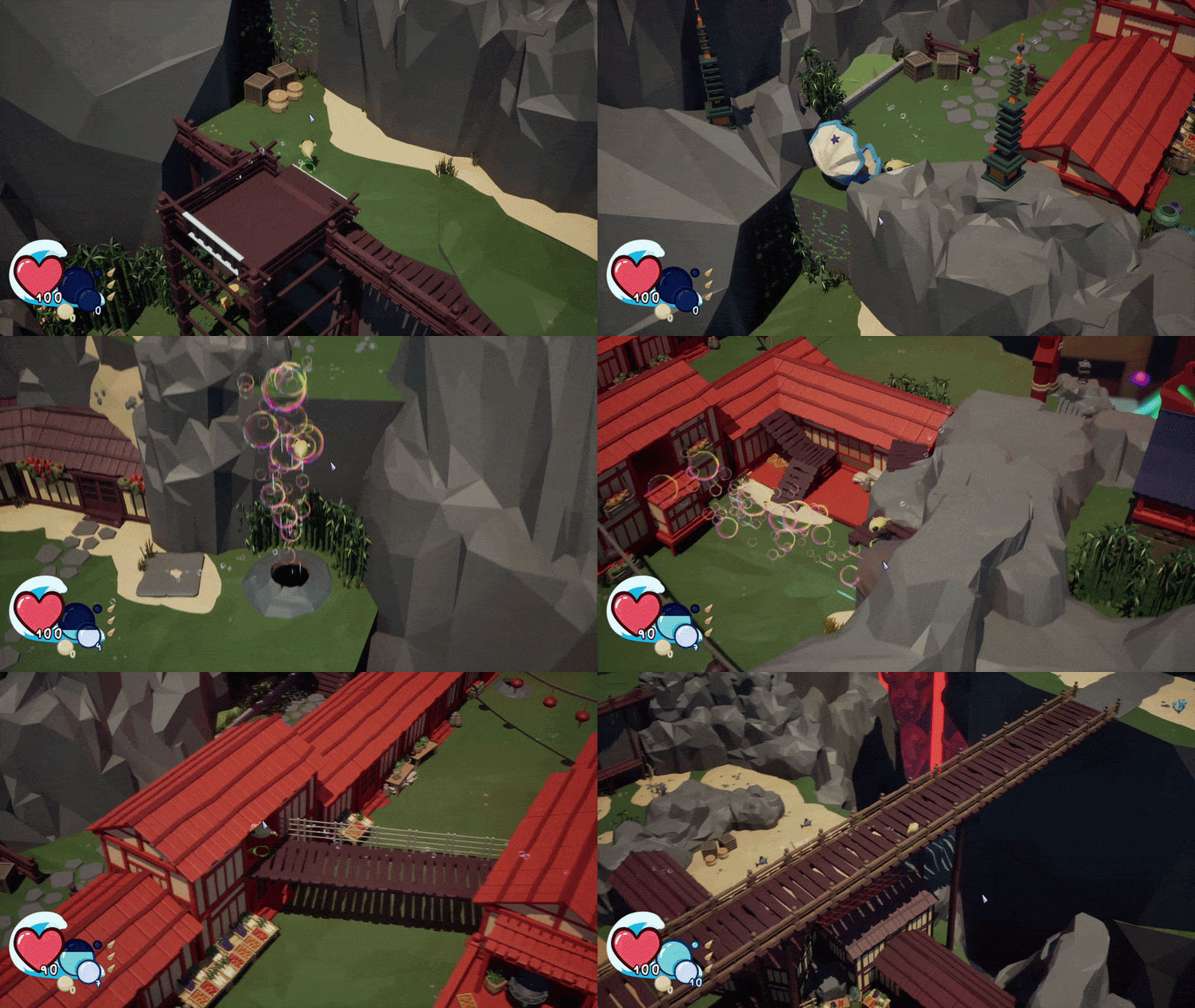
It allowed me to structure the level pacing and design a more dynamic exploration, which is a core pillar of the game. I took advantage of the isometric perspective to create a sense of progression by hinting a future area or showing a past one.
Closing Thoughts
This project is a decisive milestone in my game development career. In fact, it is my first complete game, my first game jam, and my first experience designing levels for an isometric game. Working alongside a team and receiving feedback from an industry mentor made it an incredibly valuable learning experience.
The main challenges involved designing readable spaces in an isometric perspective, creating engaging puzzles around the jam's theme, and building satisfying enemy encounters. These challenges helped me improve my skills in level design, pacing and player guidance.
Looking back, I would create more visual variety between levels, introduce additional environmental mechanics, and improve the introduction of certain enemies. I would also reduce the game's linearity by adding optional side paths with extra combat, interactions, and puzzles, while making some encounters more intense and challenging.
Itch Page
