SPELL BOUND
3D Platformer, FPS
Introduction
SPELL BOUND is a first-person platformer game, greatly insipred by Neon White, that focus on high speed and quick reaction. During a level, the player has to use the rune pick ups on his path, each granting unique ability, to make it through the level. The game has a great focus on timing and rewards vigilant players with shortcuts to better their level time.
Project Details
- 7 weeks development, 2025
- Unreal Engine 5
- Team of 4 people
- Level Design
- Level Art
- VFX
- Designed 11 of the 13 levels

My Goals
-
Design multiple unique levels built around dynamic combinations of movement mechanics and abilities.
- Create fast-paced and dynamic gameplay sequences that reward precision, skill and player awareness.
-
Gradually introduce new mechanics through the gameplay.
-
Design each level with precise metrics to ensure predictable and reliable player actions.
-
Promote replayability through shortcuts, path optimization and timing.
Team Goals
-
Design abilities that can be combined into fluid sequences.
-
Create fast-paced and dynamic levels
-
Design at least one shortcut in each level.
-
Promote creativity and replayability through planned and improvised paths while keeping the gameplay fast, readable and rewarding.

Level Breakdown
Level Guidelines
Each level was designed around some guidelines to ensure that the experience stayed consitent along the whole game.
-
20 seconds to 2 minutes level duration on the first run.
-
Design at least one deliberate shortcut.
-
Design for replayability.
-
Focus on level flow, speed, timing, aim & mechanics.
-
Unique paths & environments.
-
Introduce new mechanics through gameplay.
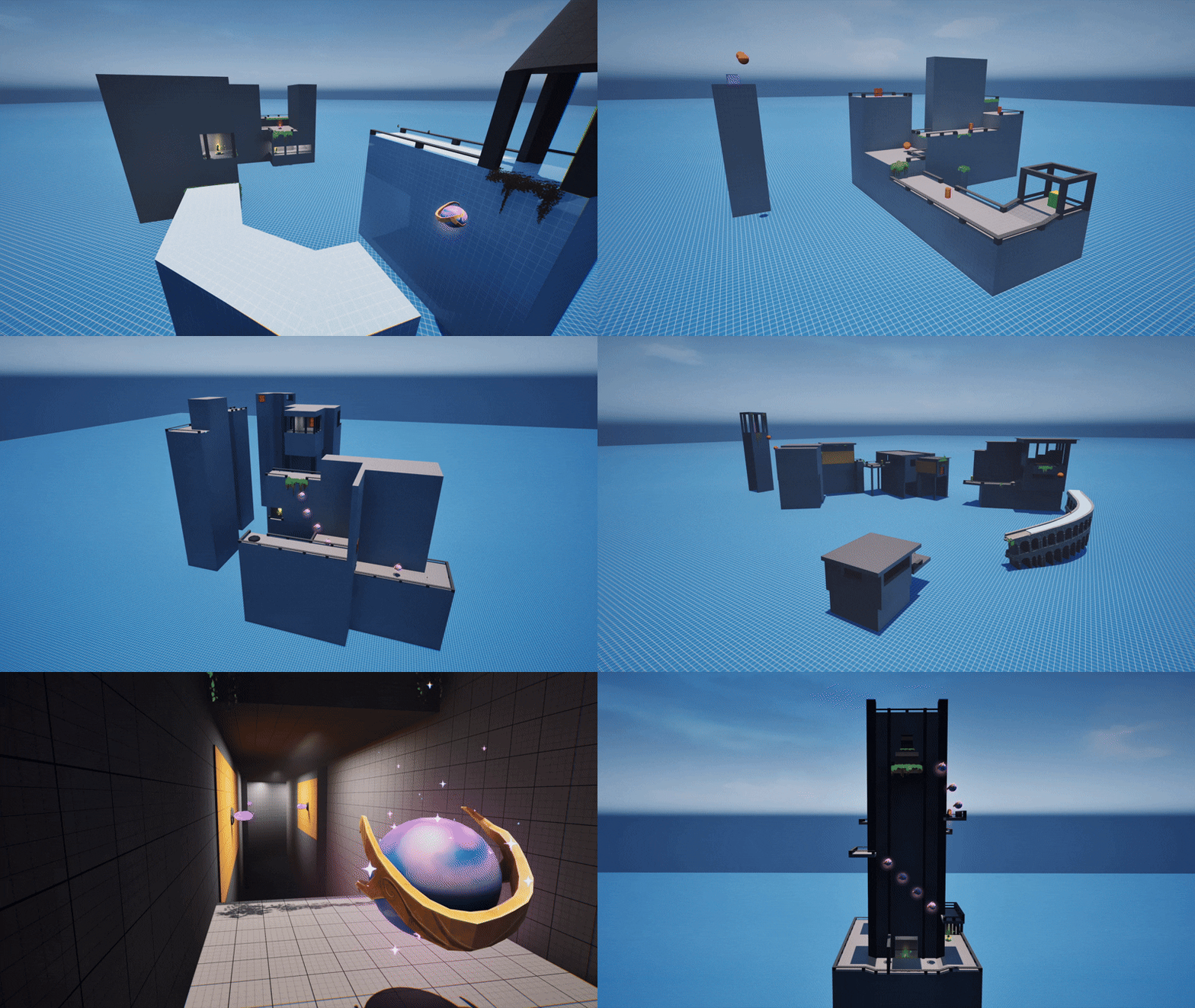
Breaking Down | Level 8
Level Objective
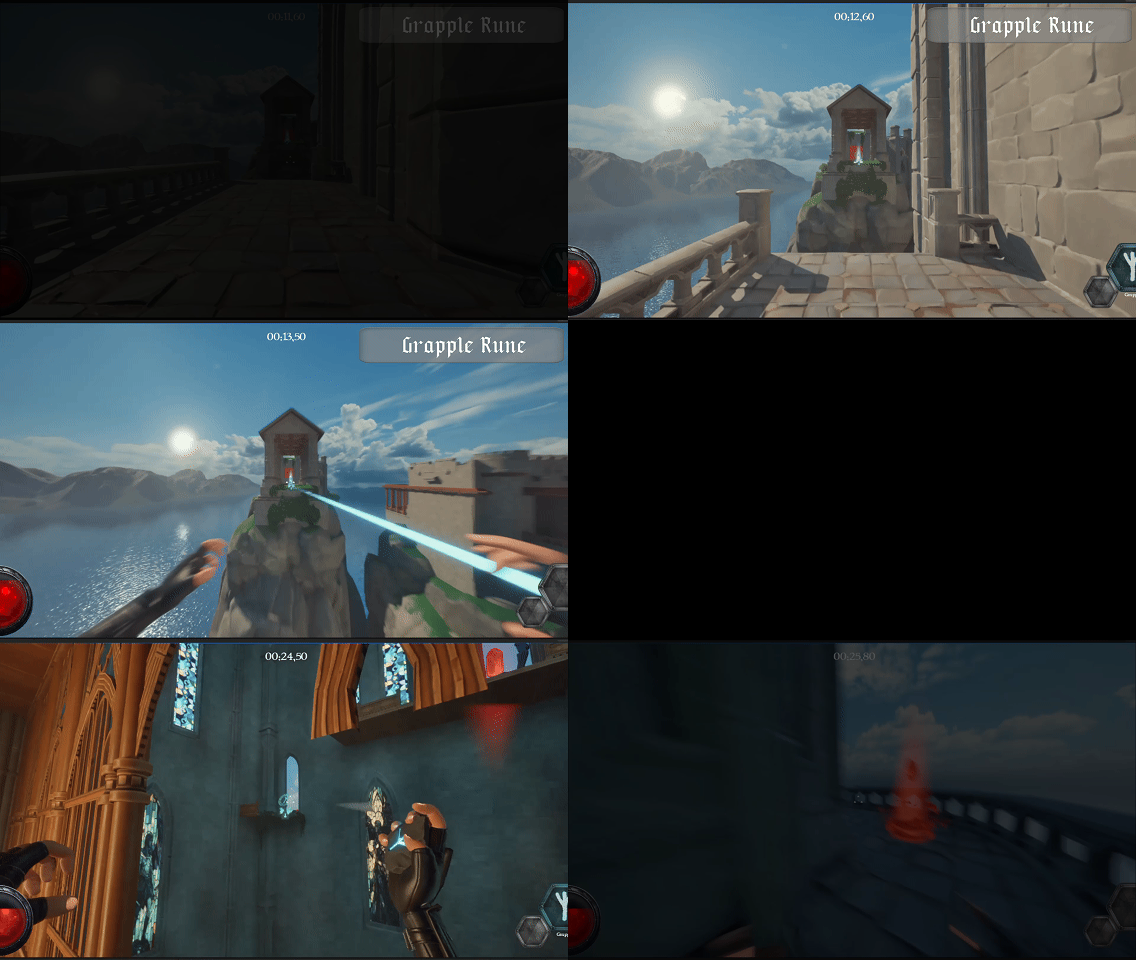
The 8th level introduces a new ability : the grappling hook. The level is designed around this mechanic to showcase its various uses, such as gaining altitude, descending quickly, and traversing long distances.
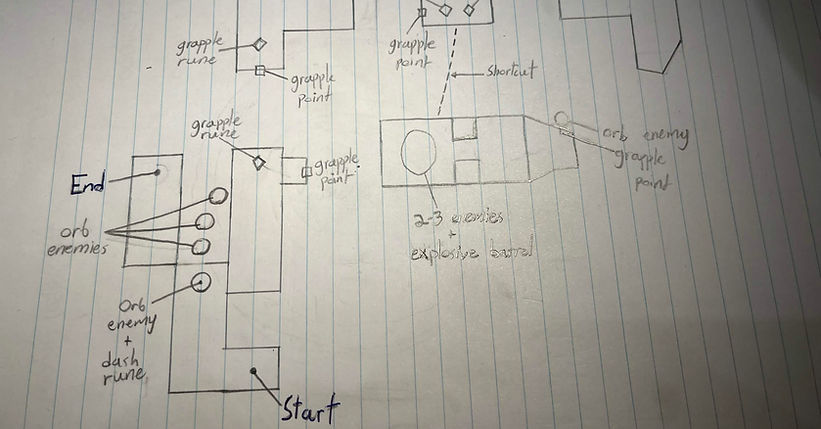
Paper Design
Blockout Stage
Simple geometry was used to quickly iterate on traversal, timing, pacing and level flow, allowing frequent playtesting sessions with the team to help polish the overall rhythm of the level.
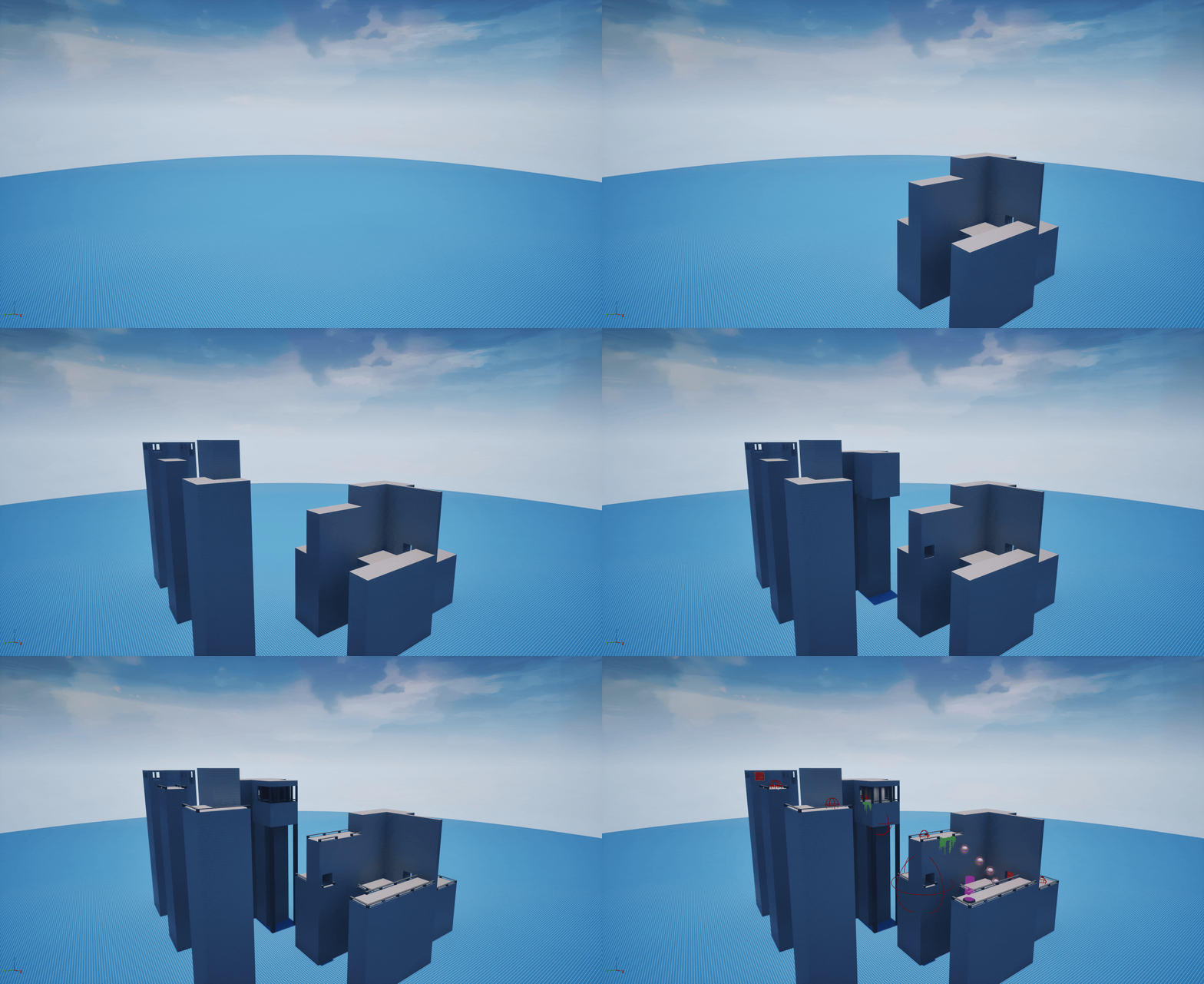
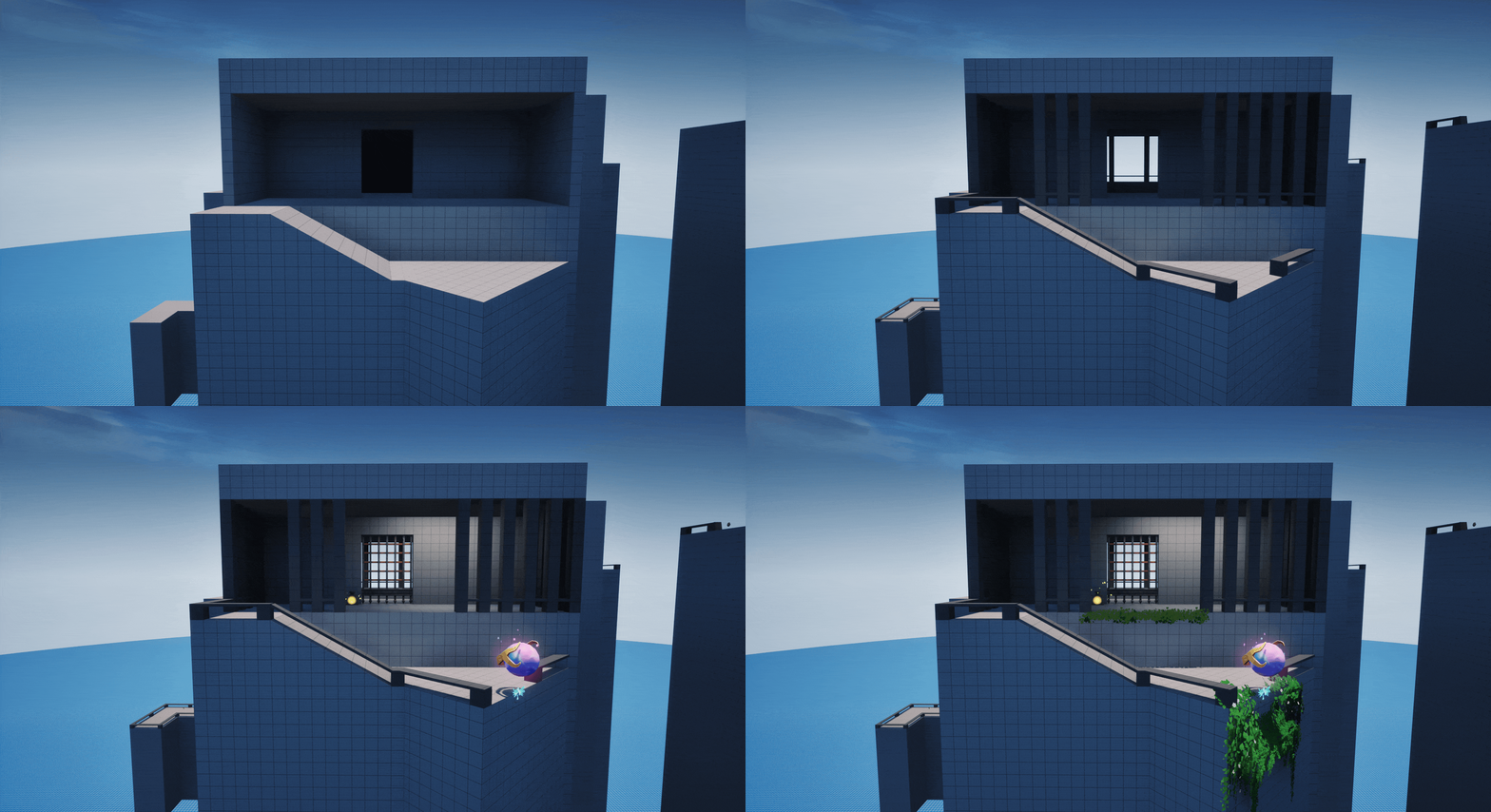
Final Design

Shortcuts
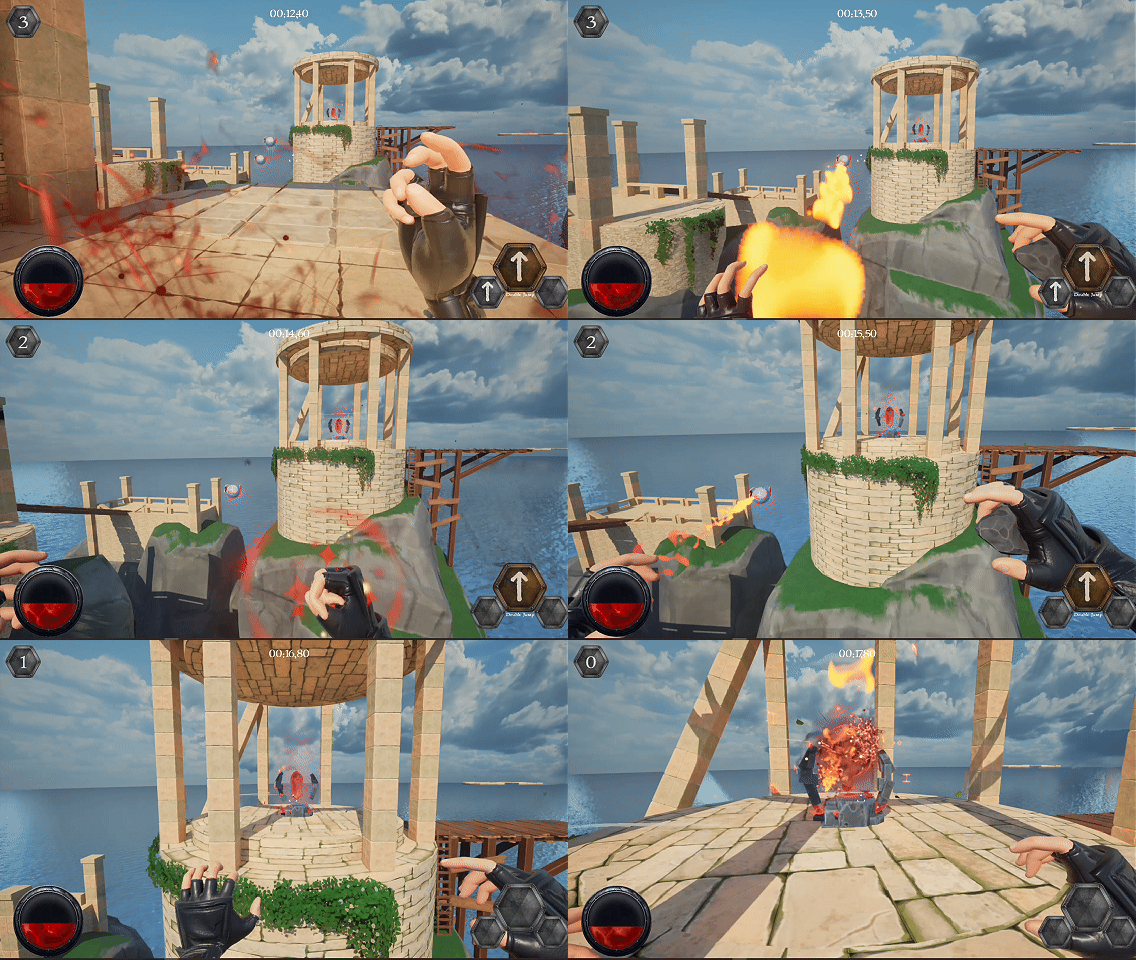
Each level features at least one designed shortcut intended to enhance replayability and reward players who are able to exploit them to their advantage.

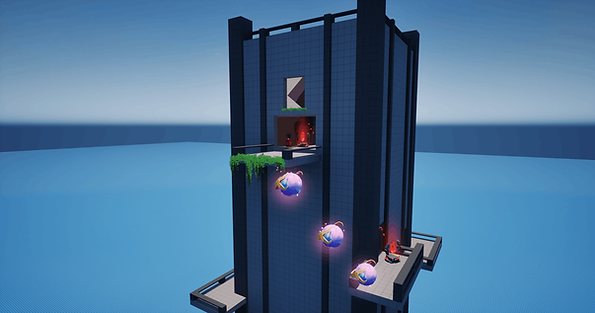
I wanted to create a shortcut that rewards aiming precision and spatial awareness. To achieve this, I used a crystal orb enemy that dies in a single hit, allowing the player to quickly refocus on the shortcut.
Main Path
Shortcut
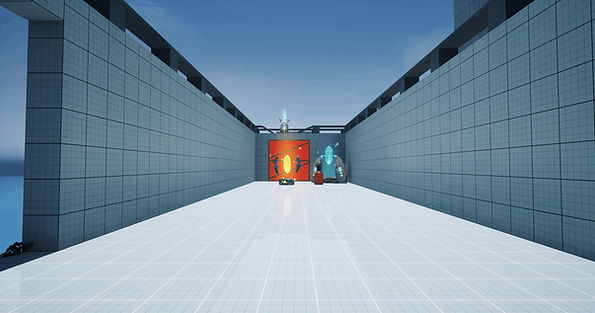
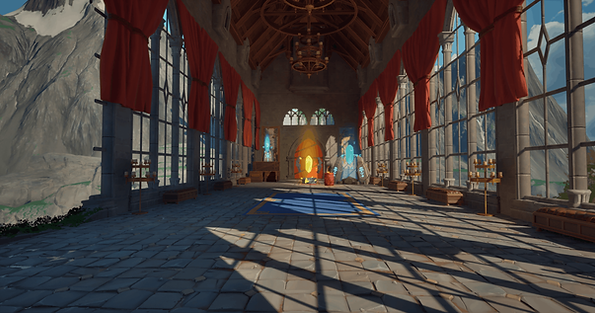
Blockout Process



Level Design Techniques
Affordance
As the game focuses on speedrunning, it was essential to guide the player without breaking their pace. Green vines act as visual cues to indicate direction, supporting quick decision-making while maintaining flow and momentum.
Also, enemy placement further reinforces affordance by naturally suggesting the optimal path, ensuring smooth navigation without explicit instructions.
Readability
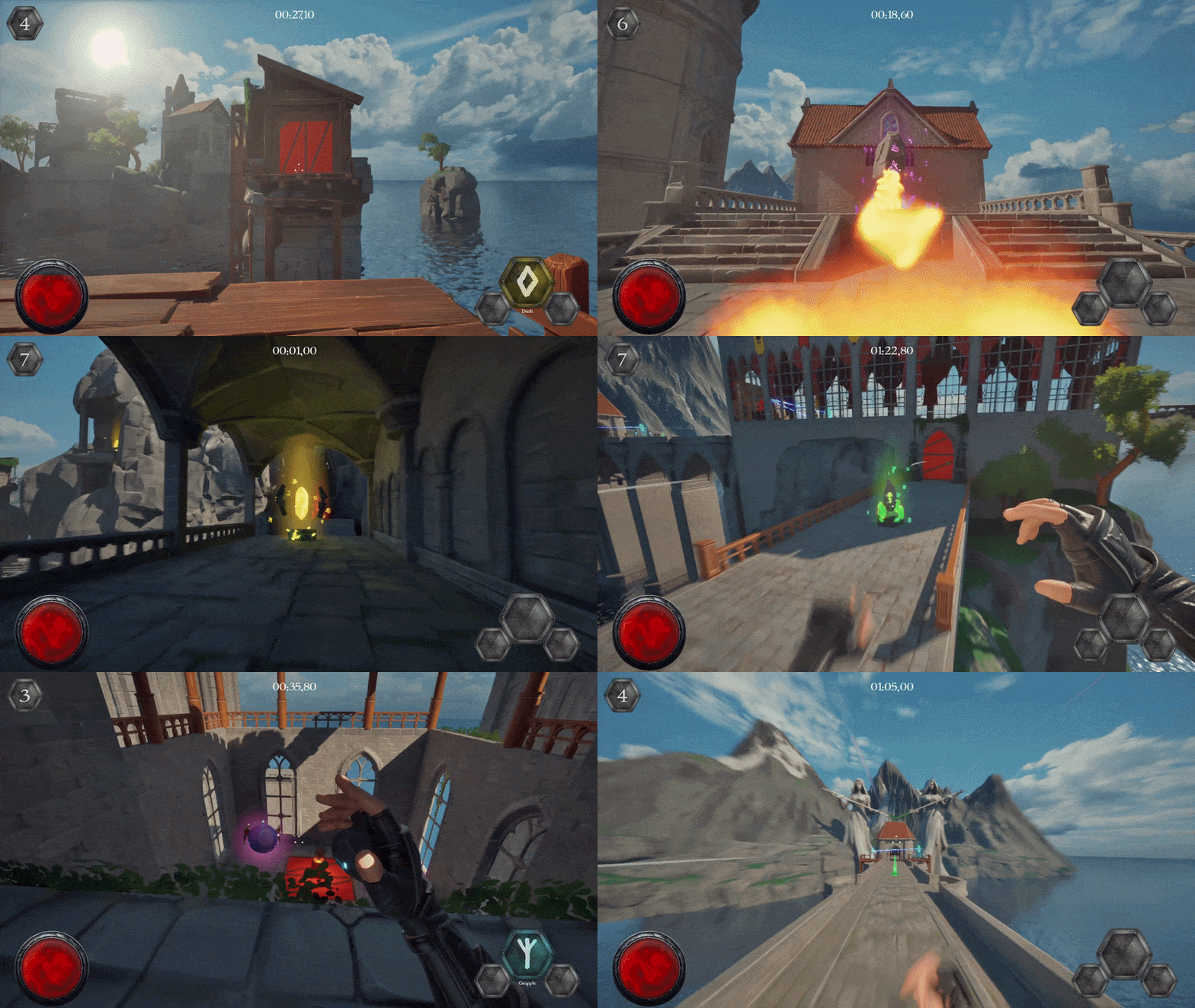
Color coding was used to improve readability and support fast decision-making during a level. Green vines indicate the golden path while subtly suggesting designed shortcuts. Red highlights destructible walls and explosive barrels. Also, each rune enemies have the color of the rune ability they drop.
Verticality
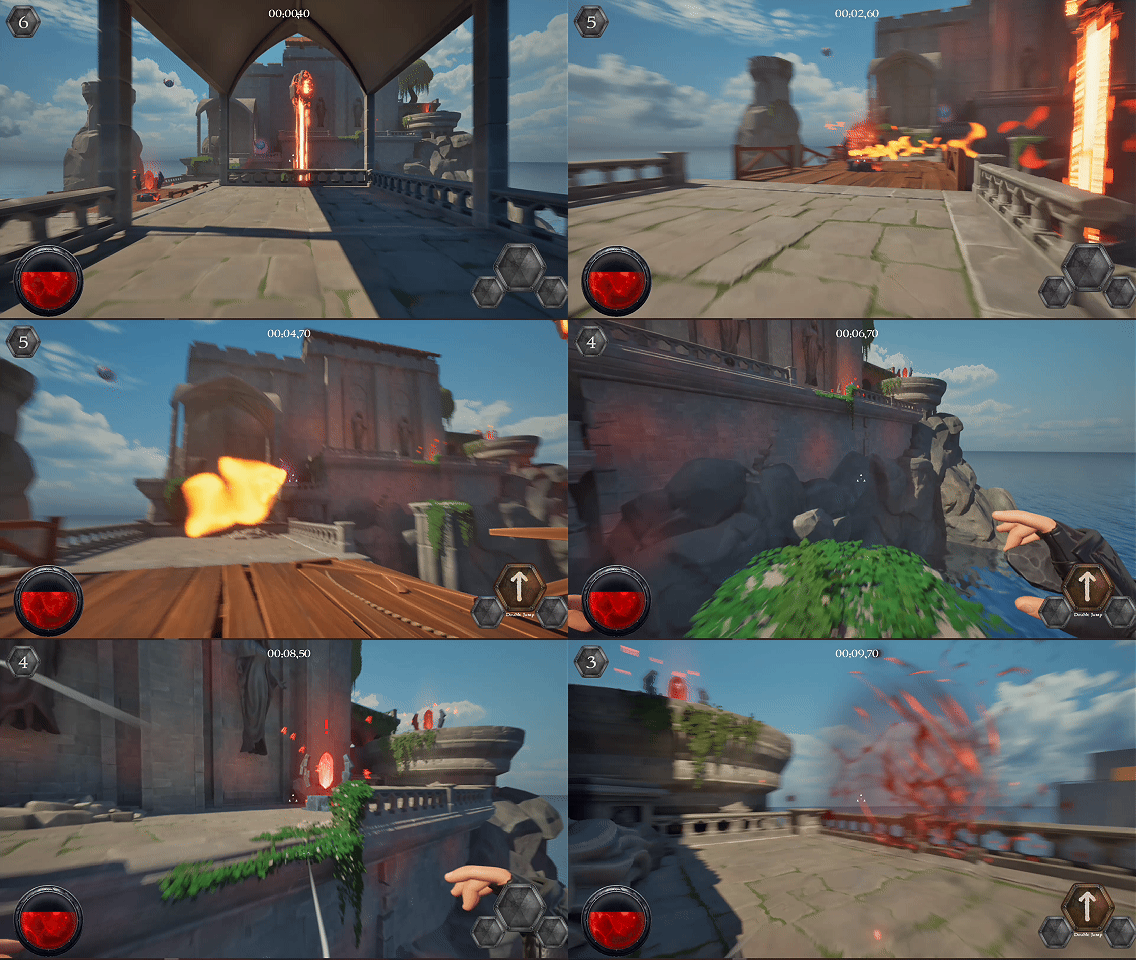
Verticality in my levels is mainly used to enrich gameplay and keep the experience dynamic and the player engaged. Changes in elevation create opportunities for dynamic movement and ability combos without disorienting the player.
Leading lines
Abilities are mandatory to the completion of a level. Therefore, ability rune pickups and enemies placement become an invisible line that seemlessly guides the player along the critical path.

Closing Thoughts
Spell Bound is one of the most challenging projects I’ve worked on as a Level Designer. It pushed my blockout and level design skills by forcing me to meticulously craft levels using precise metrics, ensuring that every interaction felt rewarding rather than frustrating, while never losing sight of the game’s focus on speed, strong level flow, and replayability.
This project also taught my team and me the importance of maintaining a realistic scope. As we were inexperienced with this type of project, our initial ambitions were far too large. At first, we aimed to create 30 to 35 fully playable and fully arted levels. In the end, we completed 14 fully playable levels, though only 13 made it into the final release due to a lack of time to complete the art pass for level 9.
Looking back, I feel that certain level main paths could have benefited from additional gameplay sections. Expanding them further would also have created more opportunities for shortcut design, allowing players to experiment with more advanced techniques, discover new routes, and continuously improve their best times.
Itch Page
